The state of the close, as it is, not as it was last reported
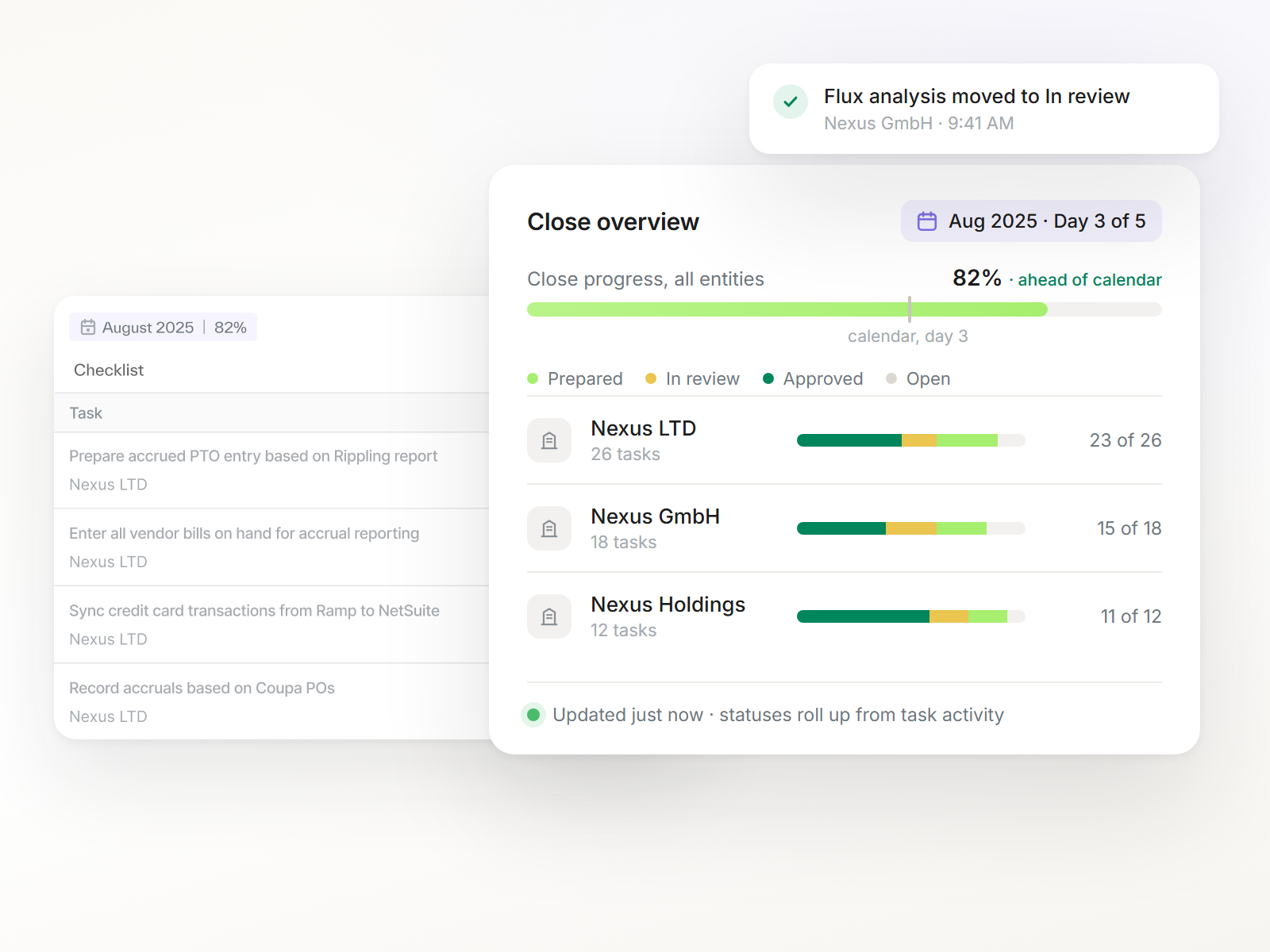
A live view of where every close task stands, across entities and teams. Not a dashboard someone has to update. The overview is true because the work is happening inside the same platform.
Visibility that does not depend on someone updating it
Tracking tools gave finance teams the close, reported. The status you read there is only as current as the last person who updated it.
The close, reported: Dashboards and status trackers show what someone typed into them. Every month, someone spends hours gathering status, pinging preparers, and reconciling the checklist to reality.

Status nobody has to gather
- Every month, someone spends hours collecting status. That is part of the rebuild. In Ledge, task state changes as the work is prepared, reviewed, and approved, so status is never a separate chore.
- Live status across every entity and team
- No manual status updates
- Real state, not reported state
From the overview to the evidence behind it
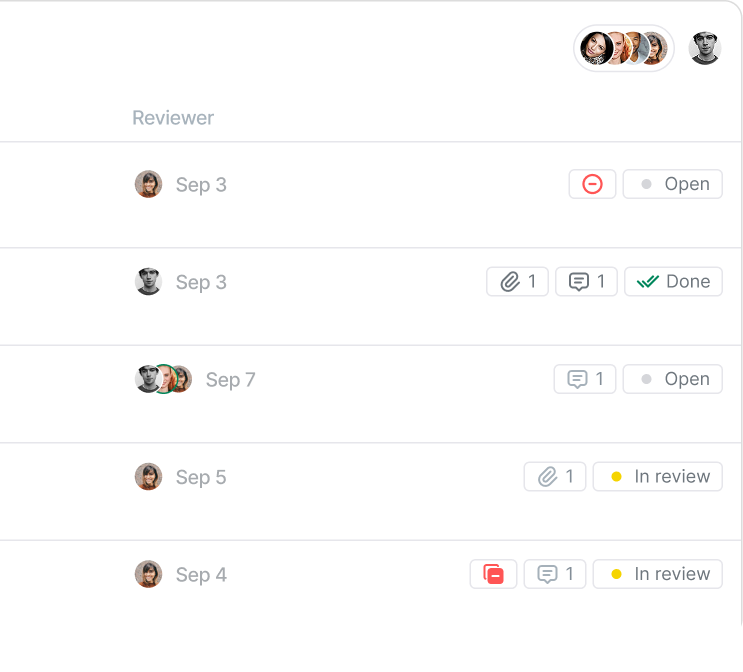
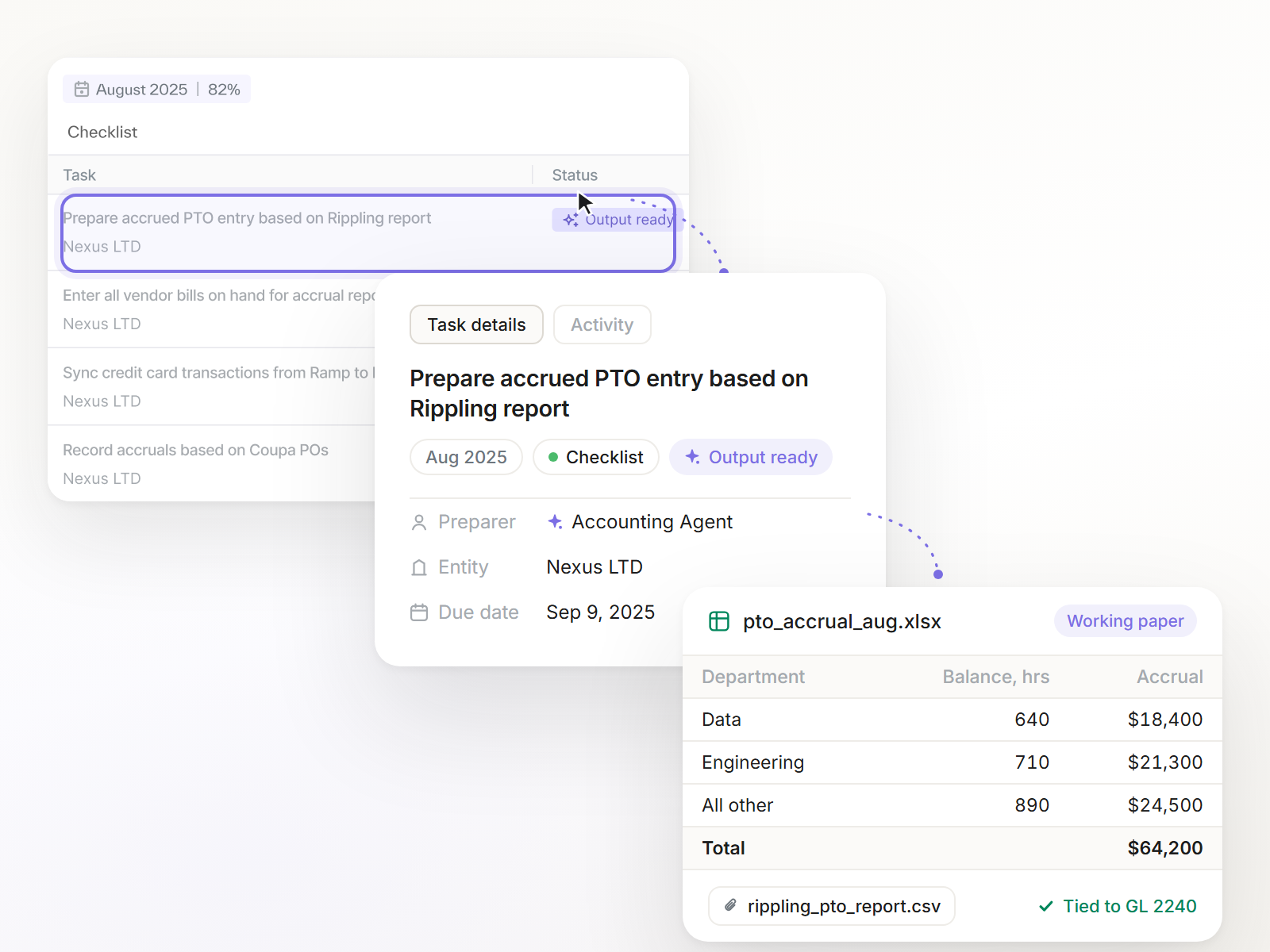
- Every status rolls up from a task, and every task opens to the prepared work behind it: the working paper, the reconciliation, the journal entry, the source data. Nothing is a number on a slide. Everything is one click from its evidence.
- One view across entities, teams, and periods
- Click through from status to task to source data
- The audit trail builds as the close moves
What you can see
Four views, all drawn from the same live close.


The check-in meeting becomes a glance
Controllers stop compiling status and start directing the close. The Day 3 check-in becomes a two-minute look at the overview, and review time goes to the balances that actually moved.
That is the unlock: the time your team spent reporting on the close goes back to running it.
- No more chasing preparers for an update
- No stale tracker to reconcile to reality
- Review time lands where the overview says it matters
Common questions


A dashboard reports what someone typed into it. The Ledge overview reflects the actual state of the work, because the work happens in the same platform. Nobody updates it and nobody can forget to.
Yes. Status, ownership, and dependencies roll up across entities and teams into a single live view.
Yes. Every status traces to the task and the evidence behind it, so sampling starts from work that is already documented.
No. Task state changes as the work is prepared, reviewed, and approved. Status is never a separate chore.
Keep going through the platform
See your close as it actually stands
Book a demo and we will show you the overview on your own NetSuite data.