Ledge has been included on the 2024 Fintech Innovation 50 list!
Learn more

Ledge vs Numeric

Whether you’re evaluating Numeric or already using it to improve visibility into your close, Ledge is built to automate what Numeric still leaves manual. Numeric helps finance teams analyze, explain, and report on close results.

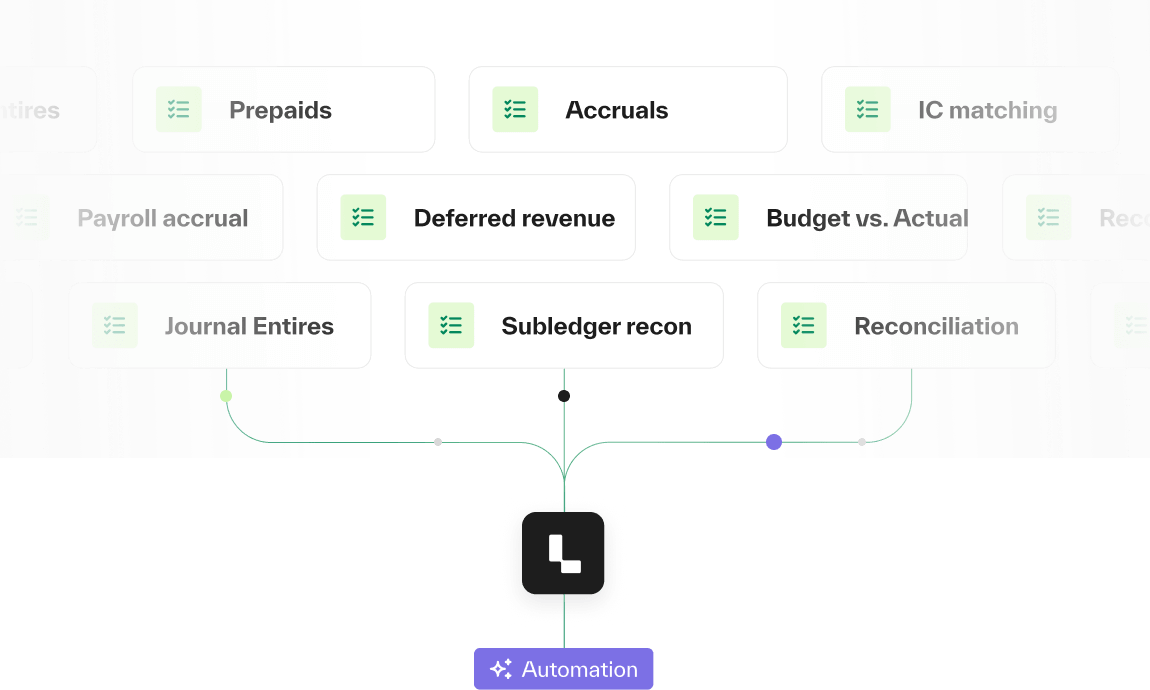
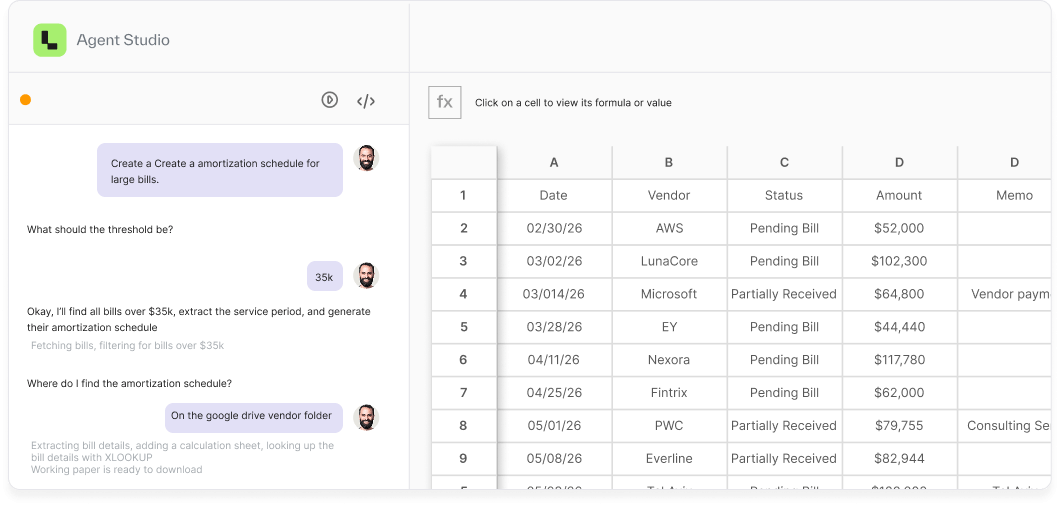
Ledge goes a step further: AI agents perform the close work itself, generating Excel working papers with live formulas, drafting journal entries, and keeping everything continuously in sync with source systems.


Trusted by finance teams at

Numeric improves visibility, but the work still happens elsewhere

Numeric is a modern, AI-forward close platform designed to improve how teams review, explain, and report on the close. It excels at: centralized reporting and dashboards, variance (flux) analysis and narratives, automation in specific, repeatable workflows (e.g. cash, certain journal entries).

But when it comes to actually producing the outputs of close workflows — the spreadsheets accountants rebuild every month — most of that work still happens outside the system.
Why close tools like Numeric still slow the close every month

Close preparation still lives in spreadsheets
Numeric can ingest and analyze spreadsheet outputs, but it is not designed to generate or continuously rebuild the working papers produced by close workflows. Teams still prepare those artifacts manually in Excel.
Automation is scoped, not end-to-end
Numeric automates specific workflows well, but coverage varies across the close. As workflows become more custom, judgment-heavy, or multi-system, preparation effort remains largely manual.
Variance analysis depends on externally prepared inputs
Numeric performs strong flux analysis, but the underlying schedules, rollforwards, and calculations those variances are based on are still built elsewhere.
The close still resets every month
Because preparation happens outside the system, much of the close effort repeats period after period, even as reporting and explanations improve.

With Ledge, AI agents perform the close, not just track and analyze it

Why it matters: Most close tools, including Numeric, still depend on humans to prepare the underlying accounting work. Ledge is built so that the system does that work for you.

Ledge vs Numeric: Structural differences between Ledge and Numeric

Automation depth
Architecture
Scalability
Implementation
ROI
AI agents execute close workflows end-to-end, generating reconciliations, working papers, journal entries, and variance analysis automatically
Agent-based execution layer that generates accounting artifacts from live multi-source data (ERP, banks, billing, subledgers)
Scales by assigning persistent AI agents to workflows; logic is reused and extended as the business grows
Go live in hours by importing your checklist and connecting your ERP. Agents can be configured in natural language in 5 minutes
Immediate workload reduction by generating working papers, reconciliations, flux, and entries automatically
Numeric
Automates defined close processes (certain journal entries) and performs variance analysis, with preparation of many schedules remaining external
Workflow automation and analysis layer built primarily around ERP transaction data and structured reconciliation processes
Scales by expanding automated workflows; effort increases as workflows become more custom or judgment-driven, with workpapers remaining manual
Customer success–led setup and ongoing maintenance for reconciliation workflows and rules
Delivers efficiency in structured reconciliation workflows, flux, and reporting; broader prep effort depends on workflow coverage
These structural differences explain why Numeric automates defined close processes, while Ledge executes the close itself through AI agents.

Ledge: one system where agents do the work, and accountants stay in control

Numeric is a modern close platform that helps teams automate parts of the close, including account reconciliations and certain journal entry workflows, while improving variance analysis, reporting, and review.
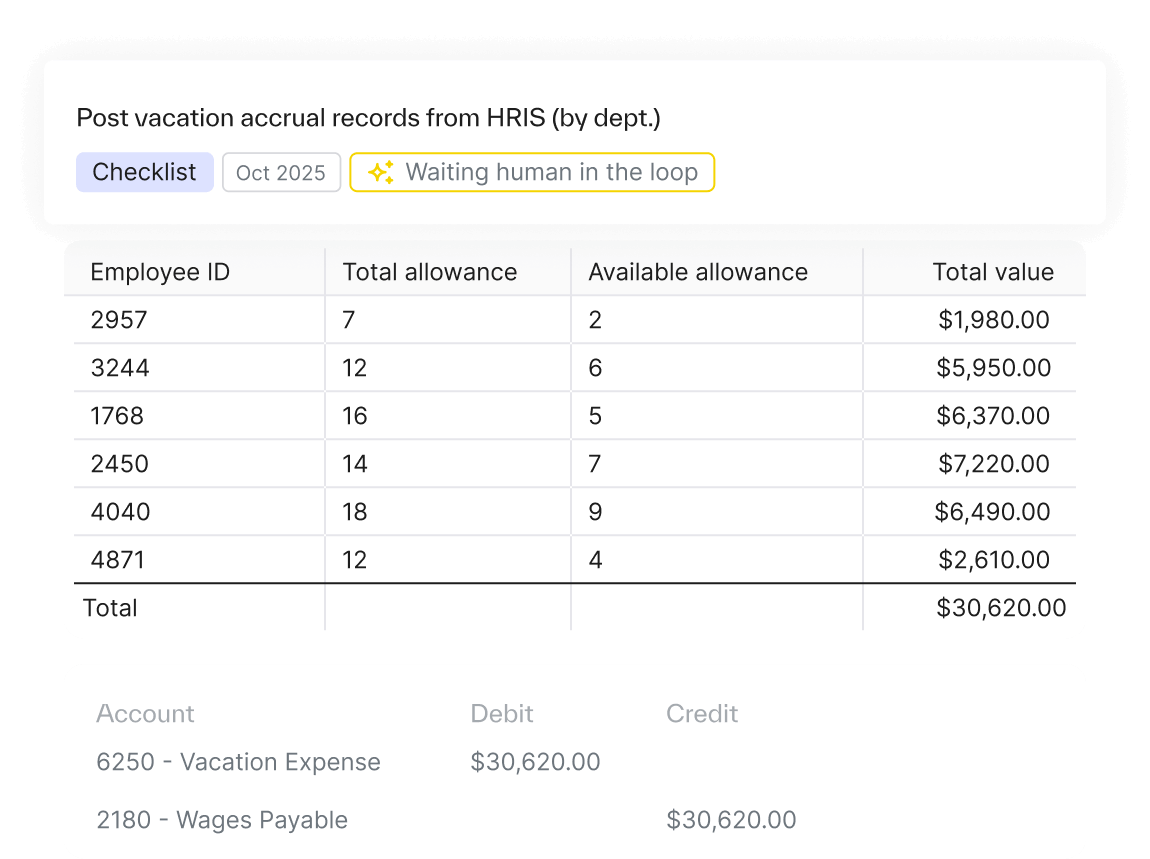
Ledge goes further: agents execute the close workflows themselves, fetching live source data, generating Excel working papers with live formulas, and drafting journal entries, while accountants direct the logic, review outputs, and approve results.

How Ledge and Numeric handle day-to-day accounting work

Reconciliation
Working paper creation
Journal entries
Checklist Intelligence
Excel outputs
Integration with ERP
Connectivity
Direct live connections to banks, ERP, billing, HRIS, and subledgers generate full reconciliation working papers automatically
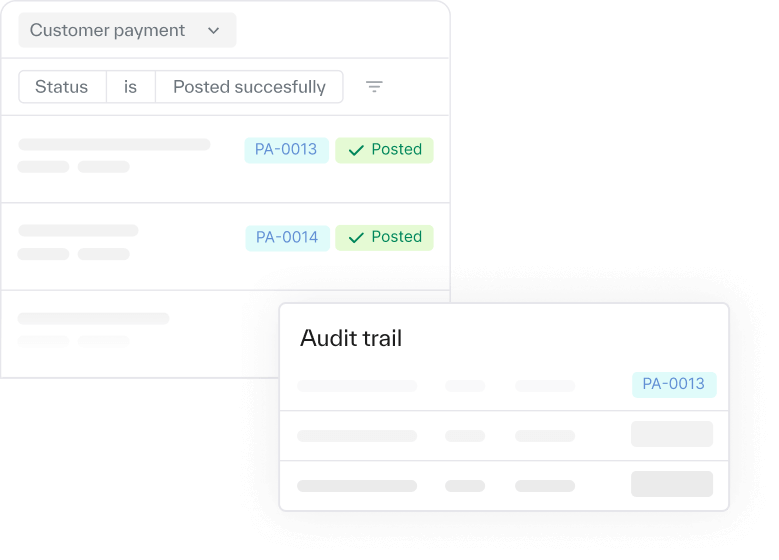
Automatically generated with live formulas and full audit traceability
JEs drafted from agent-defined workflows (cash, accruals with auto-reversals, intercompany, FX, amortization etc) and posted with ERP approvals
Dynamic checklist that updates automatically as agents complete work, with dependencies and risks flagged
Exports include live formulas; accountants can trace and adjust calculations
NetSuite-native SuiteApp with continuous bi-directional sync of accounts, segments, and metadata
Direct live integrations to banks, ERP, billing, HRIS, subledgers, and other financial systems
Numeric
Automates ERP and bank matching; broader system reconciliations rely on external preparation
Created manually in Excel and uploaded
Automates journal entries for defined, repeatable workflows (e.g., cash and rule-based patterns), reviewed before posting
Task tracking, status reporting, dependencies, and risks flagged
Exports analysis results and reconciled balances; working papers are maintained separately or uploaded
Integrates with ERP systems for transaction sync and journal posting as an external platform
Connects to ERP and bank data
In short: Numeric improves and automates parts of the close. Ledge operates as an AI-agent execution layer that generates the close automatically.

FAQ

How is Ledge different from Numeric?

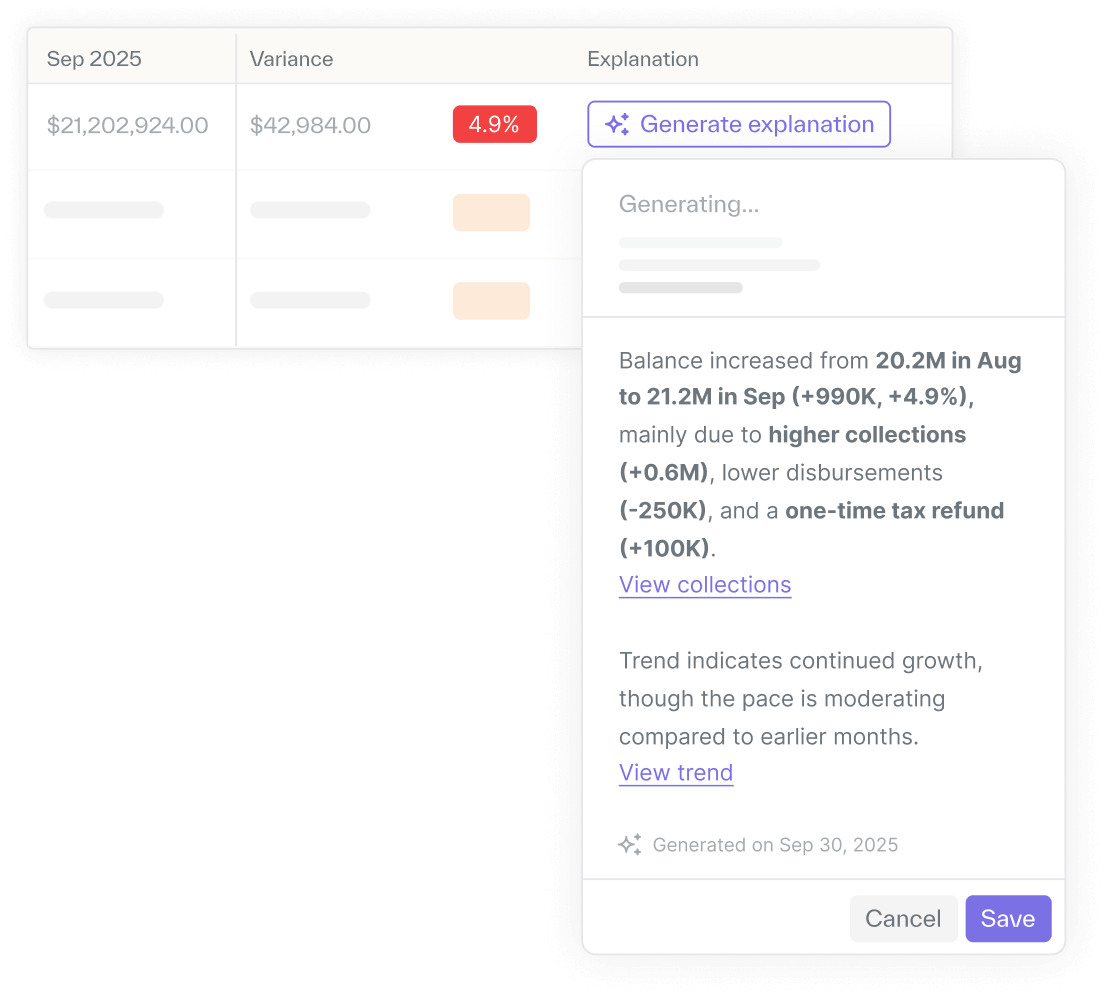
Numeric automates specific close tasks, particularly transaction matching, certain journal entries, and variance analysis, and centralizes reconciliation workflows in one platform. Ledge uses AI agents to execute close workflows end-to-end. It generates reconciliation working papers with live formulas, drafts journal entries across workflows, drafts flux narratives, and presents outputs for review and approval.
The key difference is whether your team prepares most schedules manually or the system generates them automatically.

Does Numeric automate account reconciliations?

Yes. Numeric pulls ERP (and bank) transactions, automates matching, flags discrepancies, and supports reconciliation review and submission workflows.However, supporting reconciliation schedules and working papers are typically prepared externally and uploaded or maintained in-platform.

Does Ledge replace Excel?

No Ledge does not replace Excel. Ledge generates Excel working papers with live formulas. Accountants can open, review, and adjust calculations, but they no longer have to rebuild those schedules manually every period.

What types of journal entries do Ledge and Numeric automate?

Numeric automates journal entries for defined, repeatable workflows such as cash activity and other rule-based patterns.Ledge drafts journal entries from agent-defined workflows across the close — including cash, accruals (with auto-reversals), intercompany, FX, amortization, and other custom logic — and routes them through ERP approval workflows.

Is Numeric or Ledge better for high-growth or complex organizations?

Numeric is strong for teams focused on reconciliation automation and variance visibility.Ledge is designed for teams that want to reduce manual preparation across the broader close — especially when workflows span multiple systems such as ERP, billing platforms, banks, HRIS, and subledgers.

Are Ledge and Numeric NetSuite SuiteApps?

Ledge is a NetSuite-native SuiteApp with continuous bi-directional sync of accounts, segments, and metadata, and respects existing approval workflows.
Numeric integrates with ERP systems but is not an official NetSuite partner and operates as an external platform.

Does Ledge support multi-entity and intercompany workflows?

Yes. Ledge supports intercompany journal entries and multi-entity close workflows as part of its agent-based execution model.

Ready to automate your close — not just track it?

Ledge

We're on a mission to automate and simplify finance operations for teams working at scale.

New York

325 Hudson St, New York, United States 10013

Tel Aviv

Leonardo da Vinci St 14
Tel Aviv, Israel
6473118