Ledge vs BlackLine
Whether you’re using BlackLine or still managing the close in spreadsheets, Ledge automates what other platforms only organize. AI agents reconcile accounts, generate Excel working papers with formulas, draft and post journal entries, and run flux automatically, so your close runs itself.








.png)

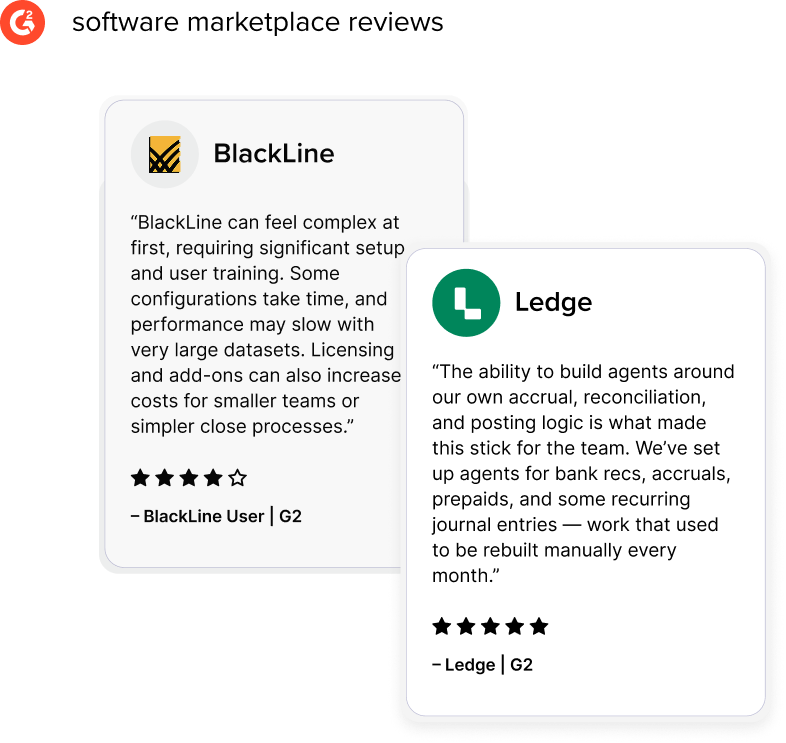
BlackLine helps you govern the close, not execute it
BlackLine is a legacy enterprise close platform built for standardization, controls, and audit readiness. It’s excellent at approvals, certification, and enforcing process consistency across large teams.
But when it comes to actually doing the work — preparing working papers, investigating exceptions across systems, drafting journal entries, and writing flux explanations — teams still rely on spreadsheets and manual effort. Automation exists, but it often requires heavy configuration, services, and ongoing maintenance that finance teams don’t want to own.
Why legacy close tools like BlackLine slow the close every month


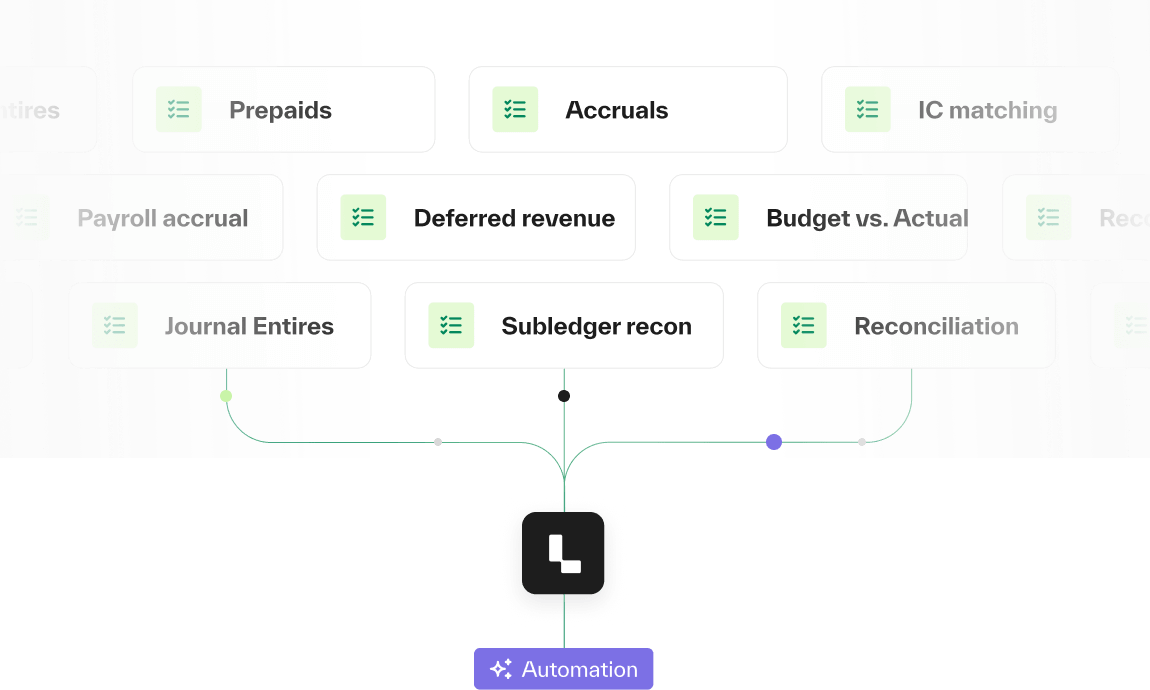
With Ledge, AI agents perform the close, not just track or report it
Why it matters: Because most close management tools, including BlackLine, still depend on humans to perform the actual accounting work.

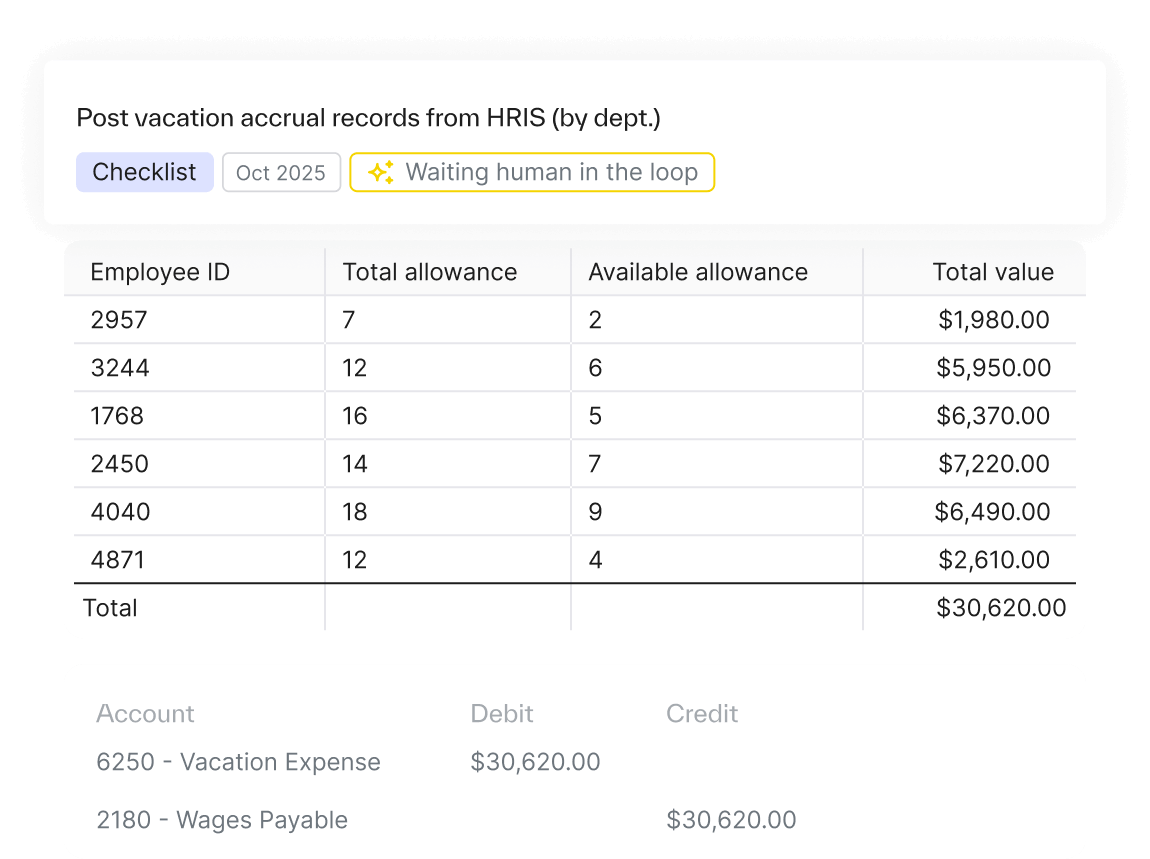
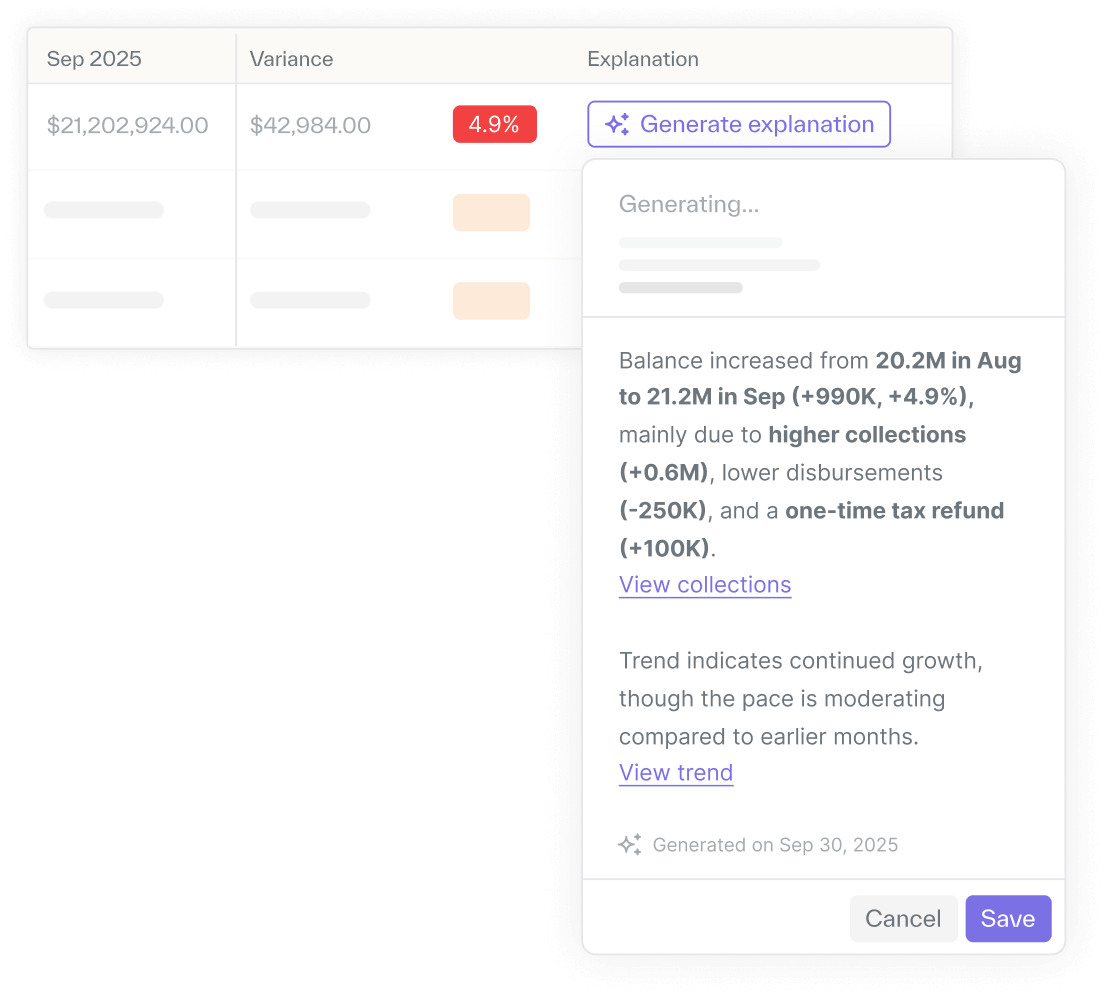

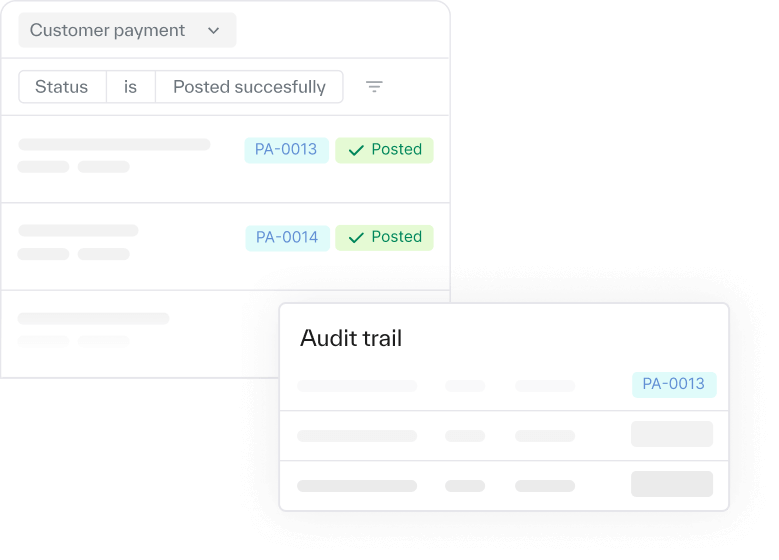
BlackLine vs. Ledge: Legacy architecture vs. AI-native automation

Ledge: one system where agents do the work, and accountants stay in control
Legacy close tools like BlackLine help standardize and govern the close. But the close still depends on humans to prepare reconciliations, build working papers, investigate exceptions, and draft entries, especially as the business changes.
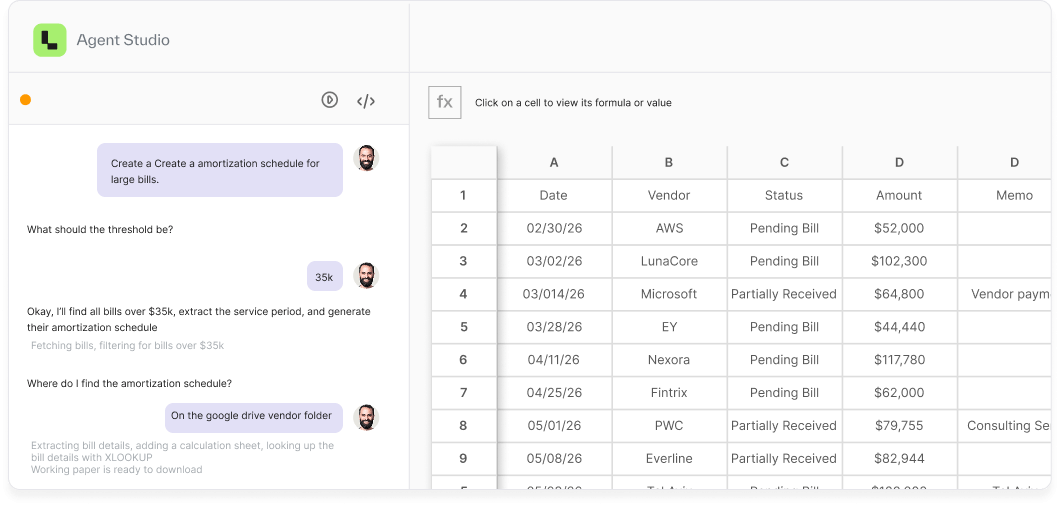
Ledge flips the model: agents execute the work every period, while accountants direct the logic, review outputs, and approve results.
How Ledge and BlackLine handle day-to-day accounting work
FAQ


BlackLine is built for enterprise close governance: controls, certification, approvals, and standardized workflows. Ledge is built to execute the close: AI agents reconcile accounts continuously, generate Excel working papers with live formulas, draft and post journal entries, and run flux — so your team starts with review, not prep.
Ledge fully replaces BlackLine.
Ledge delivers the same visibility, controls, approvals, and audit readiness teams expect from BlackLine, while also executing the work itself. For finance teams that want more ownership, flexibility, and speed, Ledge serves as the primary close system, with AI agents preparing reconciliations, working papers, journal entries, and flux every period under accountant control.
Some organizations adopt Ledge incrementally, but the platform is designed to fully support close execution and governance end to end.
Ledge automates the execution of close work, not just the management of it. AI agents generate complete working papers in Excel with live formulas, draft journal entries directly from reconciled data, and produce flux explanations tied to underlying activity. In addition, Ledge automates common NetSuite workflows — navigating the UI, pulling reports, assembling support, and preparing posting-ready entries — so accountants don’t spend close week clicking, exporting, and rebuilding work by hand.
BlackLine provides strong governance and workflow controls, but much of this execution still happens manually or outside the system. Ledge brings that work into one automated, review-ready flow.
BlackLine implementations typically require months of setup, configuration, and ongoing customer success involvement. Ledge connects in a day — you import your existing close checklist, link NetSuite and other data sources with one-click integrations, and configure your first AI agents in minutes.
Yes. Ledge is designed for modern mid-market and small enterprise finance teams that have outgrown spreadsheets or basic close tools. It’s ideal for companies with several entities, multiple systems, or a few team members collaborating on the close — especially in SaaS and other tech, digital product, or fast-growing sectors.
Ledge automates reconciliations, journal entries, flux, and working papers across sources while keeping everything transparent and auditable, helping teams shave days off their close without adding headcount.
Yes.
Ledge offers continuous, bi-directional integration with NetSuite as a certified SuiteApp and connects directly to banks, payment processors, data warehouses, AP, billing, and HR platforms, and other systems.
Ledge is audit-ready by design: outputs are linked to source data, formulas are visible in Excel, and approvals and traceability are preserved with the work.