The close that runs itself, and tells you where to look
An agentic close checklist that tracks every task, dependency, monitor, and cash position in real time. Assignments route automatically. Blockers surface before they cost a day. Status meetings become unnecessary because status is always current.
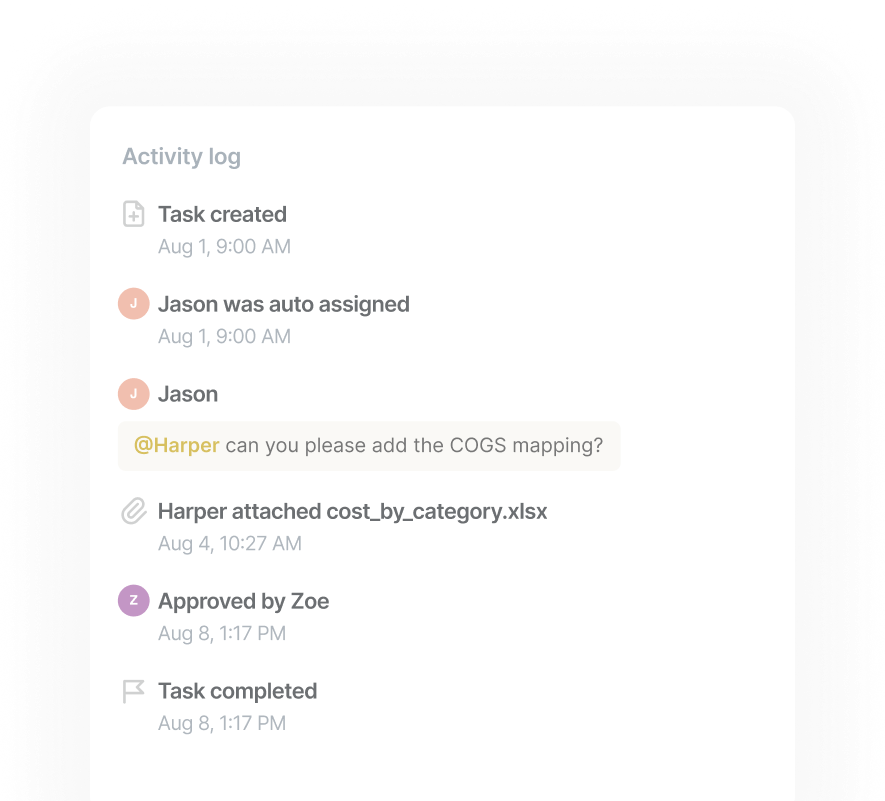
A checklist that only organizes the close leaves the work with you
Checklist tools gave finance teams the close, organized. They told you whether a task was done. The preparation, the pulling, the pasting, and the chasing stayed on your team.
Status meetings to find out what is late. Handoffs that depend on someone remembering.

The close that runs itself, and tells you where to look
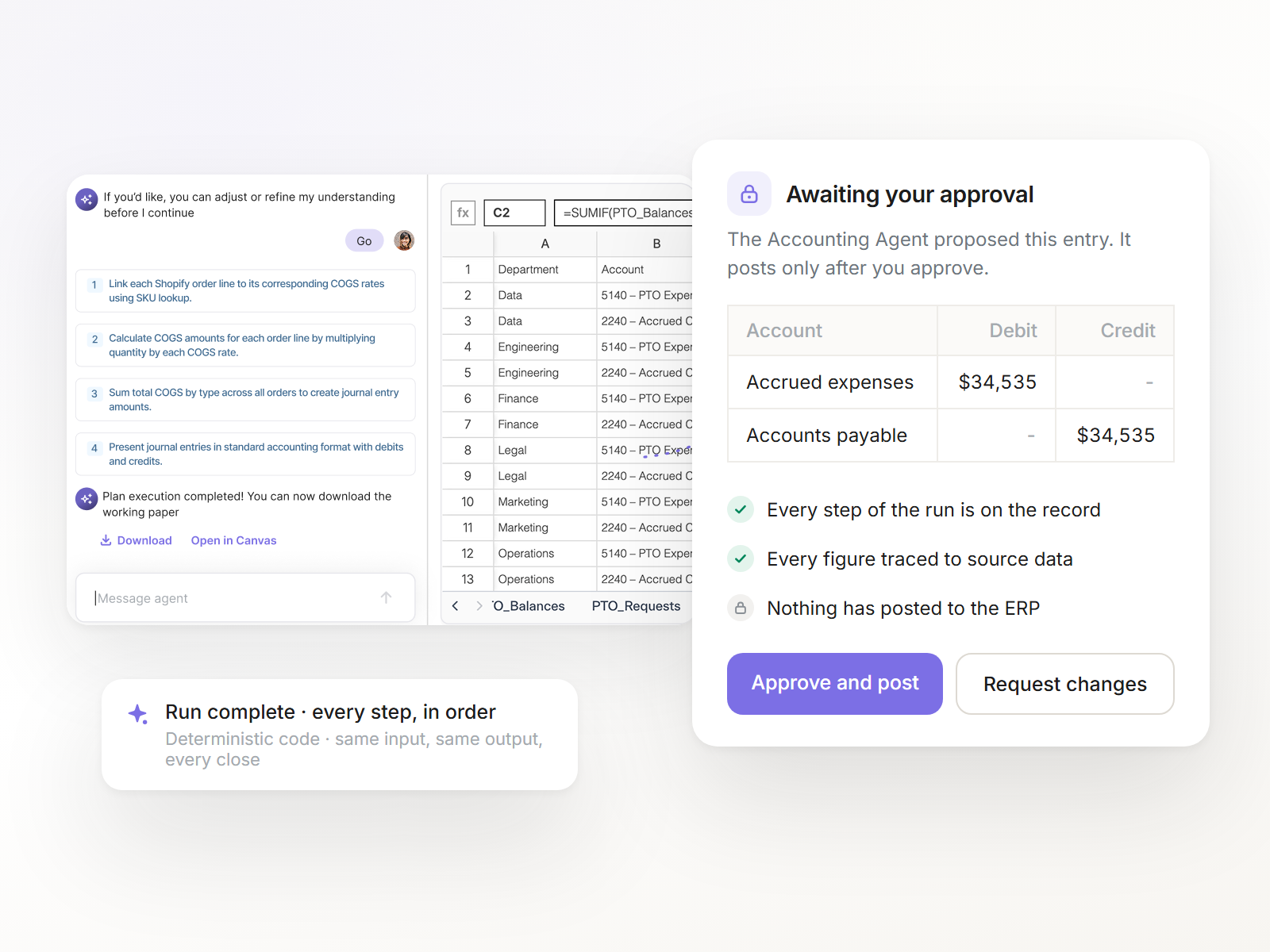
- A checklist tool tracks whether a task is done. The Ledge checklist tracks the task and does the work inside it. Accounting Agents execute while the checklist manages sequencing, ownership, and approvals. Your team opens to reviewed output, not a reminder to start.
- Every task, dependency, and monitor tracked live
- Accounting Agents execute inside each task
- Assignments and handoffs routed automatically
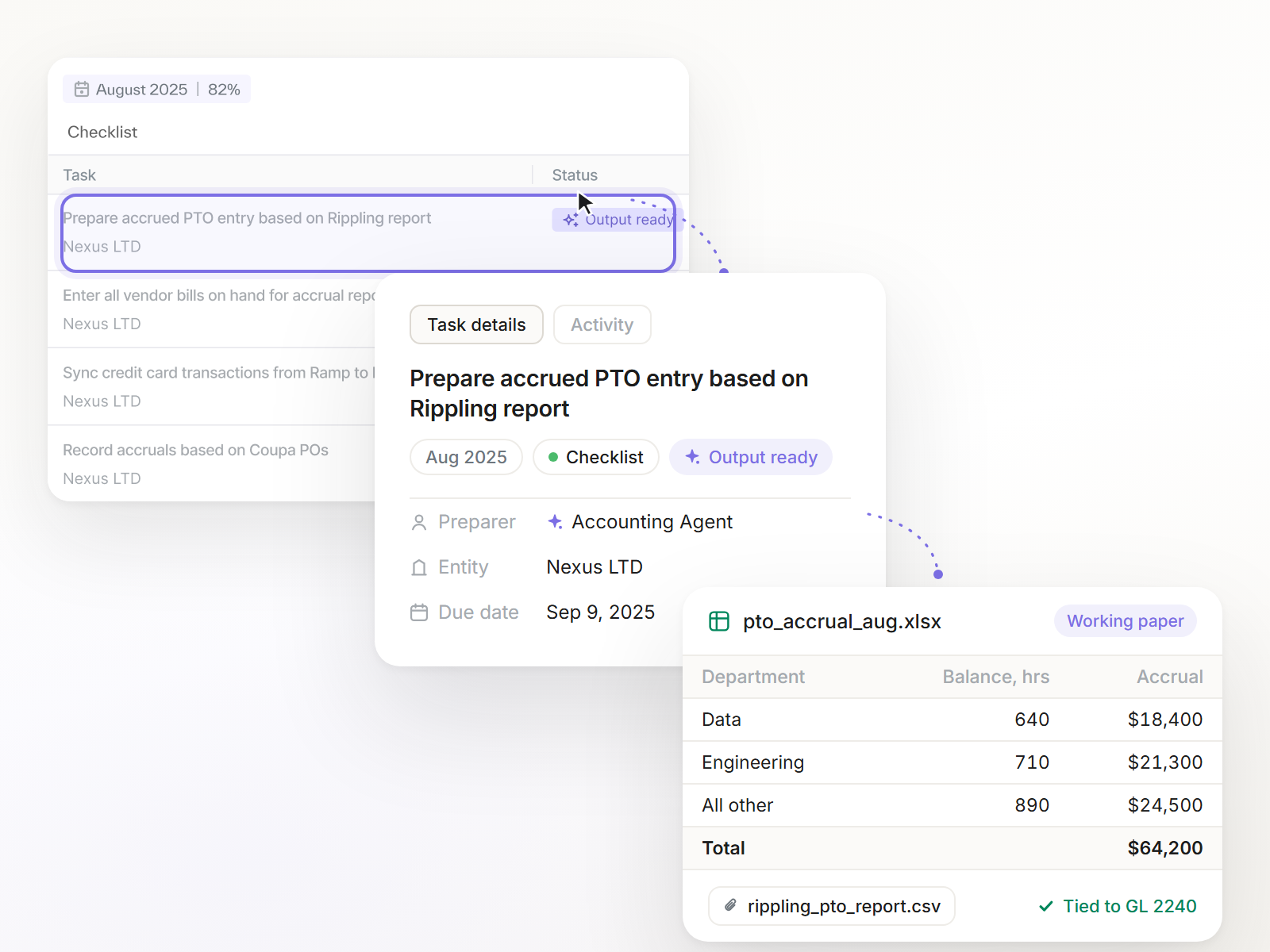
Catch the problem on the day it happens, not on Day 5 of close
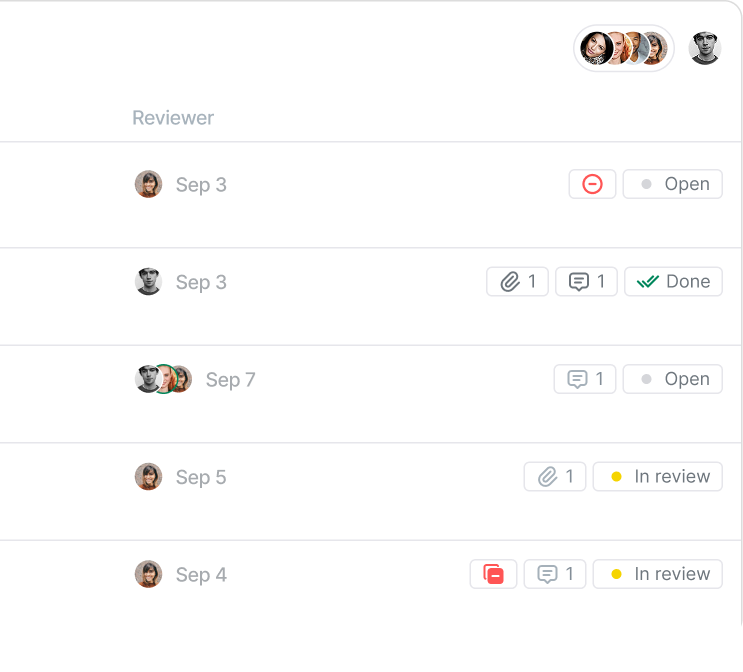
- Monitors watch continuously for anomalies, missing approvals, and stalled dependencies. Issues surface the day they occur, while there is still time to fix them without moving the close date.
- Continuous anomaly detection
- Missing-approval and blocker alerts
- Dependent tasks reflect delays immediately
- Anomalies: Unusual movements are flagged as they appear, with the source records beside them.
- Missing approvals: A task waiting on a reviewer is surfaced to the right person.
Where the cash is, in real time, across every account
- Live cash positions across every account, tied to continuous reconciliation, so the number you read is current rather than yesterday’s snapshot. Bank feeds connect through the Swift network and direct APIs.
- Live positions across every account
- Tied to transaction-level reconciliation
- No day-old cash snapshots
Everything the checklist tracks


I go to get my coffee and when I come back maybe it’s done.
”

Start with the checklist you have
Common questions


A checklist tool organizes the close. Ledge organizes it and prepares the work inside every task. That second part is what a checklist cannot change: the preparation stays on your team.
Yes. Your checklist is imported as it stands, then tasks are turned into prepared workflows over time.
Blockers surface as they occur, dependent tasks reflect the delay immediately, and the impact is visible the same day.
No. Approvals stay in your workflow with the evidence attached, and nothing posts without a sign-off from your team.
Keep going through the platform
Run the close without chasing it
Book a demo and see your checklist managed on your own NetSuite data.