Ledge vs ChatGPT, Gemini,
& Claude
ChatGPT, Claude Code, and the Gemini API can build real close automation, and the prototypes genuinely work. But getting the output right takes rounds of debugging and prompt refinement. Maintaining it takes more. And running it as a production close, with orchestration, memory, audit trails, and compliance, is an engineering project on top of the close you're already running.
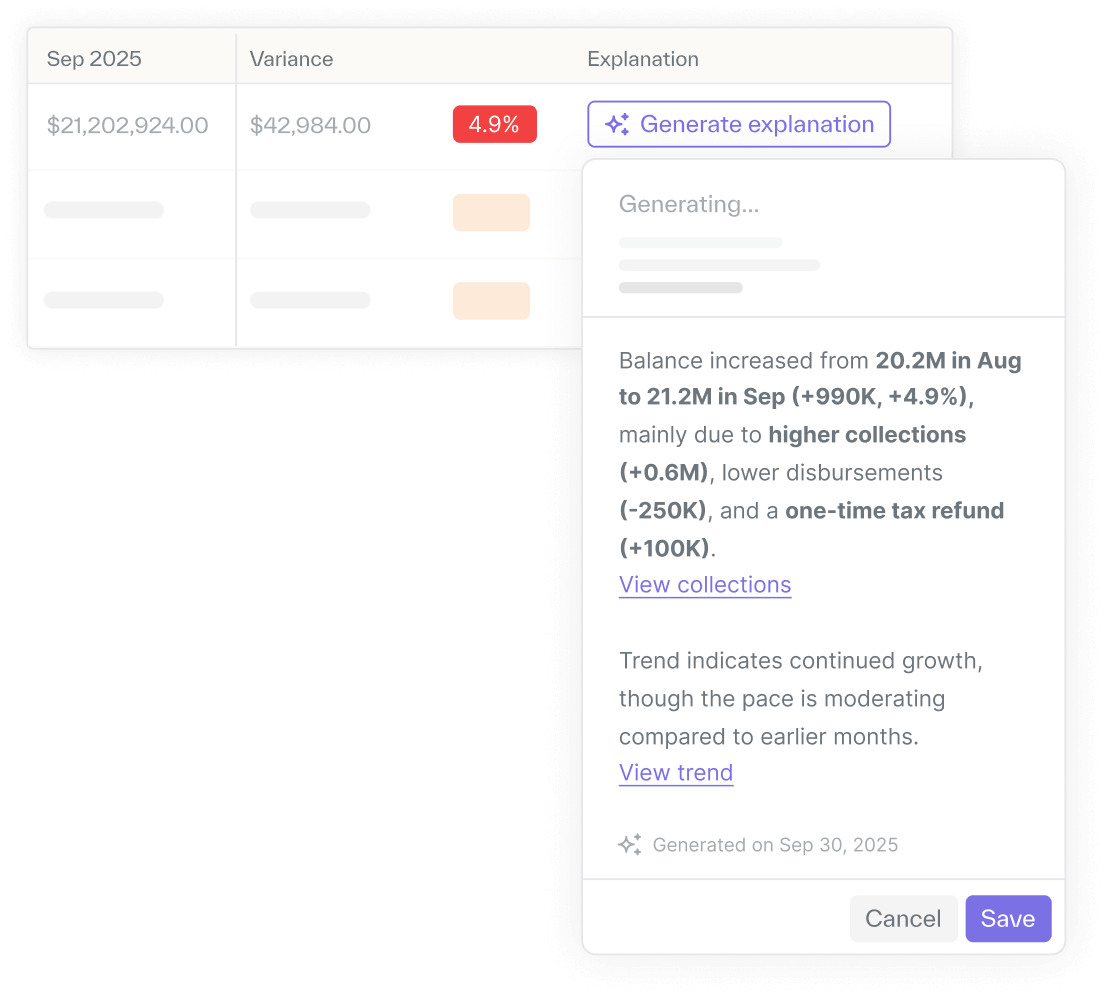
Ledge replaces that entire effort. AI accountants are configured in minutes to reconcile, prepare working papers, draft journal entries, and run flux, so your team reviews instead of rebuilds.







.png)

ChatGPT and Claude can build the prototype, not run the close
ChatGPT, Claude Code, and the Gemini API can build real close automation, and the prototypes genuinely work. But getting AI to produce audit-ready output takes rounds of debugging and prompt refinement. Maintaining it takes more: edge cases, API changes, and schema updates that only the builder can fix. And stitching isolated tools into a production close with orchestration, memory, and compliance is an engineering project on top of the close you're already running.
Why building close automation yourself costs more than it saves


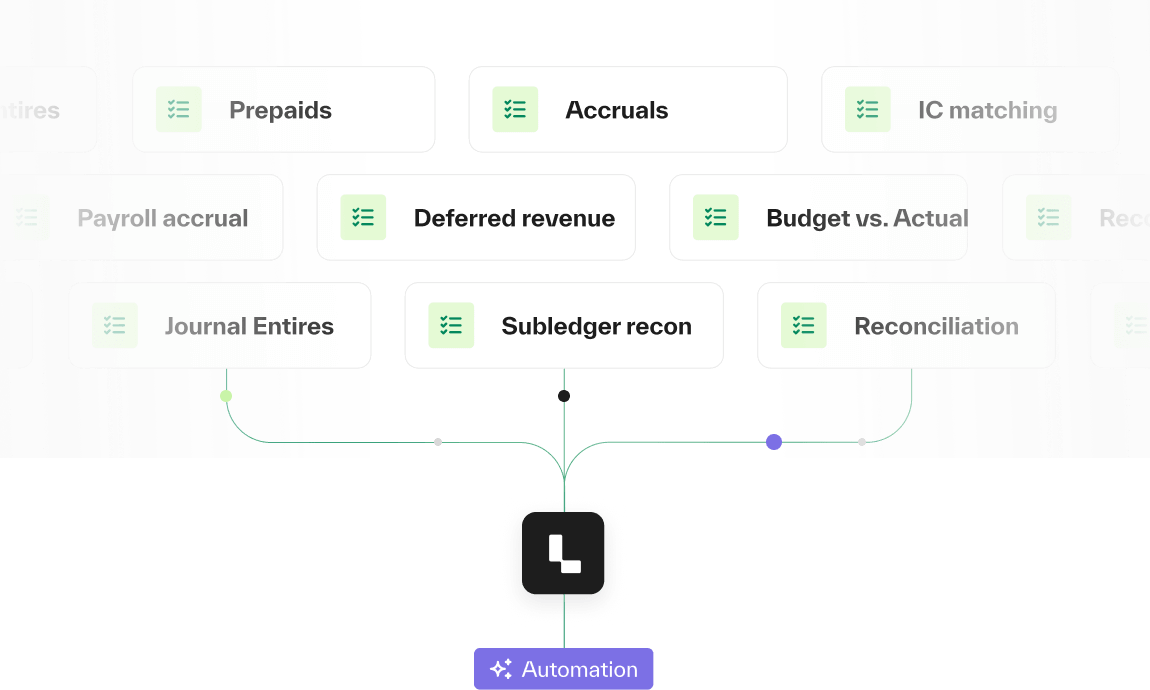
With Ledge, AI agents perform the close, not just isolated tasks
Why it matters: Because building, debugging, and maintaining close automation yourself is an engineering project on top of the close. Ledge AI accountants are configured in minutes, not built over months.


Ledge vs ChatGPT & Claude: Structural differences

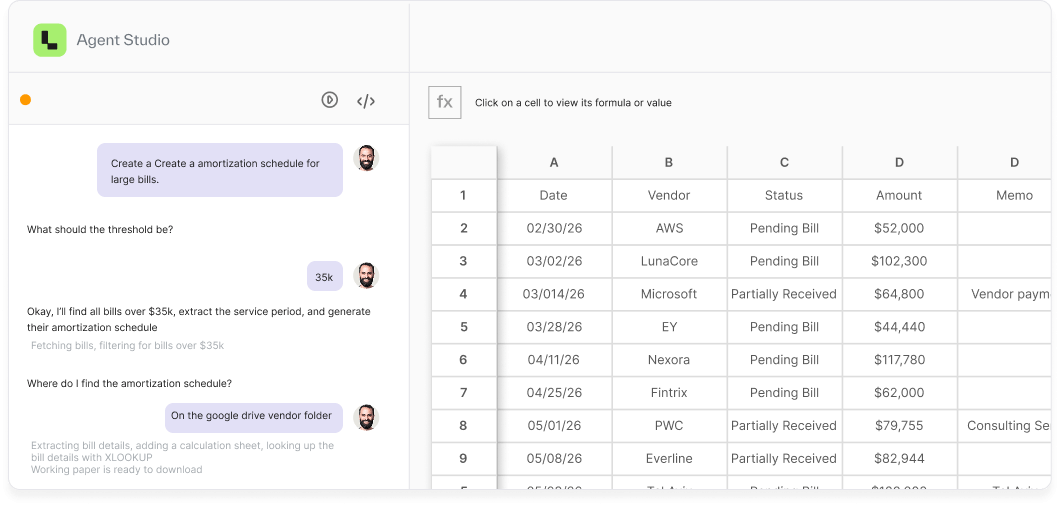
Ledge: one system where agents do the work, and accountants stay in control
General-purpose AI tools can automate individual close tasks. But building, debugging, and maintaining them, on top of the close itself, is an engineering project most finance teams didn't sign up for.
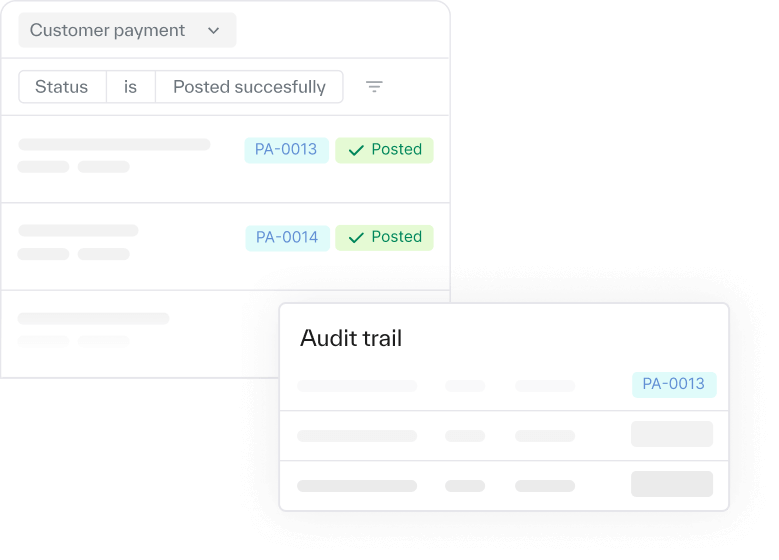
Ledge replaces that effort. AI accountants execute the work inside your close workflow, with orchestration, memory, audit trails, and compliance built in.
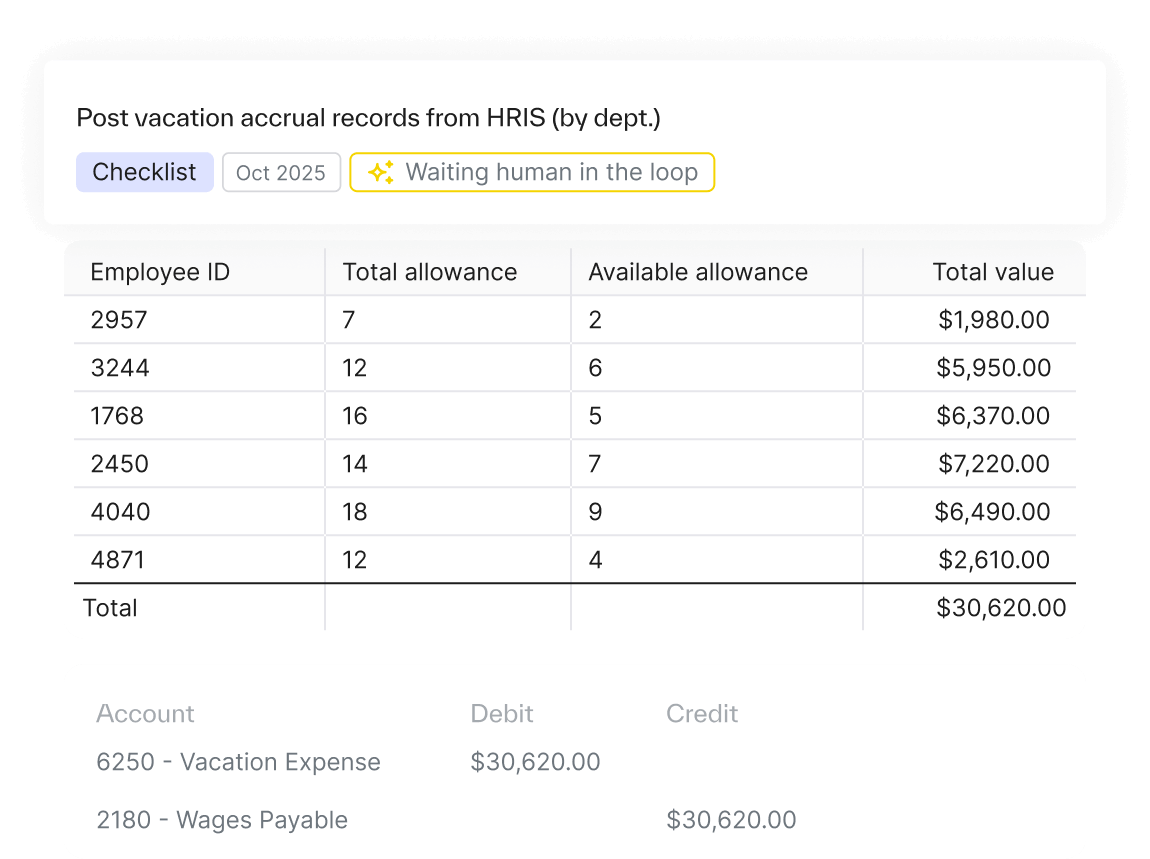
How Ledge and ChatGPT/Claude/Gemini handle day-to-day accounting work
FAQ


The practical difference is effort. Building a single close tool with general-purpose AI takes real time — prototyping, debugging, prompt refinement, testing — all on top of the close you're already running. Then maintaining it is an ongoing project: edge cases, API changes, schema updates. And the builder becomes a single point of failure. With Ledge, AI accountants are configured in minutes in natural language. The platform handles integrations, cross-period memory, recovery loops, and audit trails automatically. Your team operates it — no engineering maintenance required.
They can automate individual close tasks — and code builds can produce deterministic, reliable output. What they can't do is run the close as a system. A financial close requires tasks that depend on each other, corrections that persist across periods, recovery when something fails, and audit documentation at every step. Building that system-level infrastructure yourself is possible but means months of engineering work — and then indefinite maintenance — on top of the close itself.
No Ledge does not replace Excel. Ledge generates Excel working papers with live formulas. Accountants can open, review, and adjust calculations, but they no longer have to rebuild those schedules manually every period.
Not by default. Homegrown builds lack SOC 1 and SOC 2 reports, so auditors must assess your custom system directly — adding scope and cost. Building a compliance layer (audit trails, change management logs, access controls) is a separate project on top of the automation itself. Ledge is SOC 1 & 2 compliant and ISO 42001 certified, with audit trails built automatically as agents work.
Someone can pick it up — but they'd need deep technical knowledge of how the prompts, code, and edge-case handling all work together. It's not an org-level system with documentation and shared access by default. It's institutional knowledge in a new form — the same problem the close already has, just moved from spreadsheets to a codebase. Ledge workflows are platform-level: visible to the whole team, with no single-person dependency.
Yes. NetSuite-native SuiteApp with continuous bi-directional sync, plus 150+ native integrations including 11,000+ banks, HRIS, payroll, and billing platforms. Building equivalent connections with general-purpose AI means custom API work maintained individually — and every integration is another system to keep alive as APIs change.
Yes. Ledge supports intercompany journal entries and multi-entity close workflows as part of its agent-based execution model.