Run the close from a single, orchestrated workspace
Plan, execute, and track every close task across entities, teams, and systems — without chasing updates. Ledge brings your entire close into one live workspace. Tasks, owners, dependencies, approvals, and evidence are all connected, so everyone knows what’s done, what’s blocked, and what needs attention — in real time.
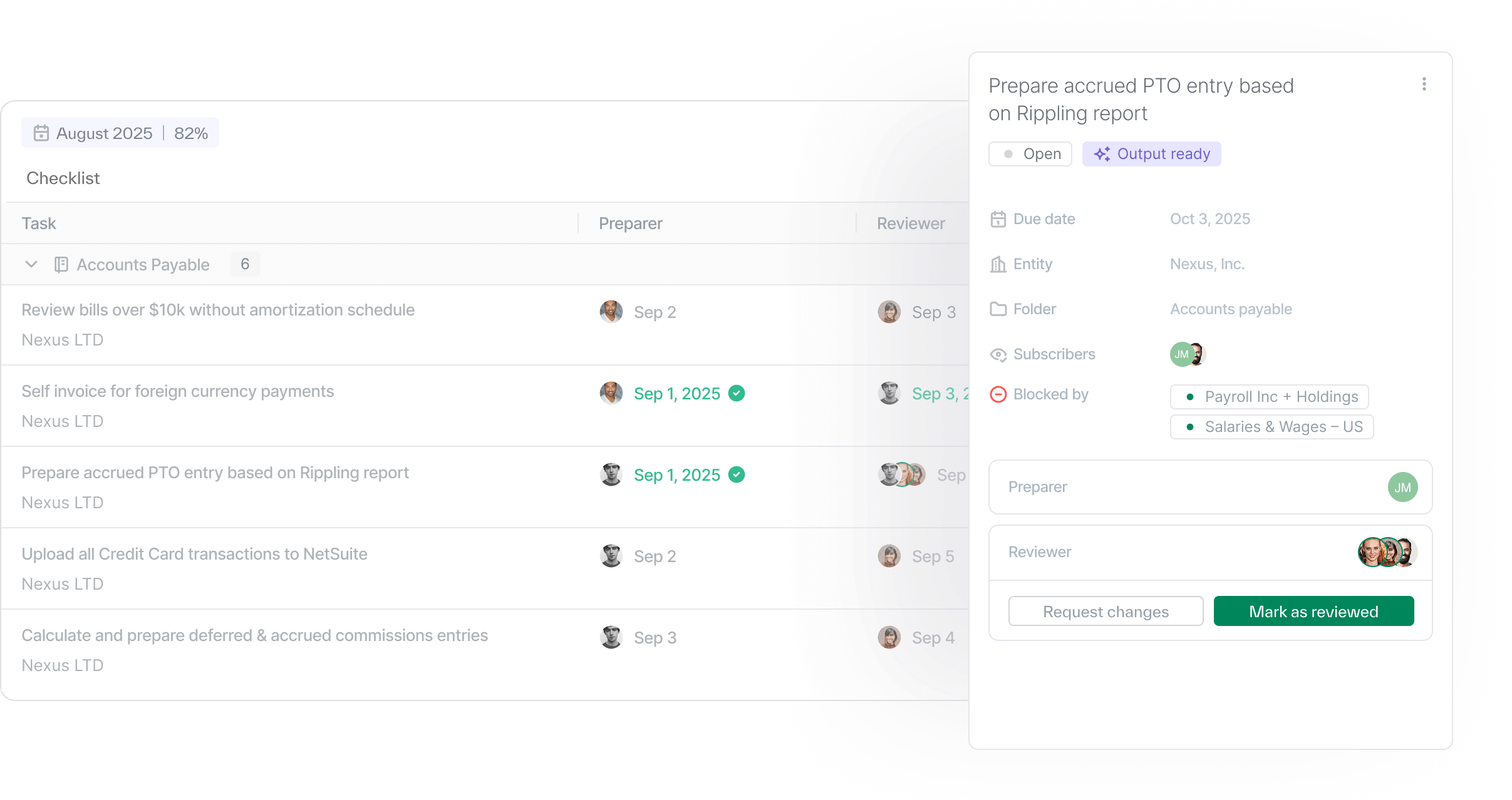
With Ledge, we can scale reconciliation without scaling headcount.
We were able to go live quickly without R&D or costly implementers & saw very fast time to value.”

Always know where your close stands
Know that every entity, account, and task is covered
- Entity-specific close checklists with clear preparer and reviewer ownership
- Central definition of required group tasks with local flexibility where needed
- Automatic coverage as entities, timelines, or structures change
- Confidence that the close starts complete — not from a stale spreadsheet
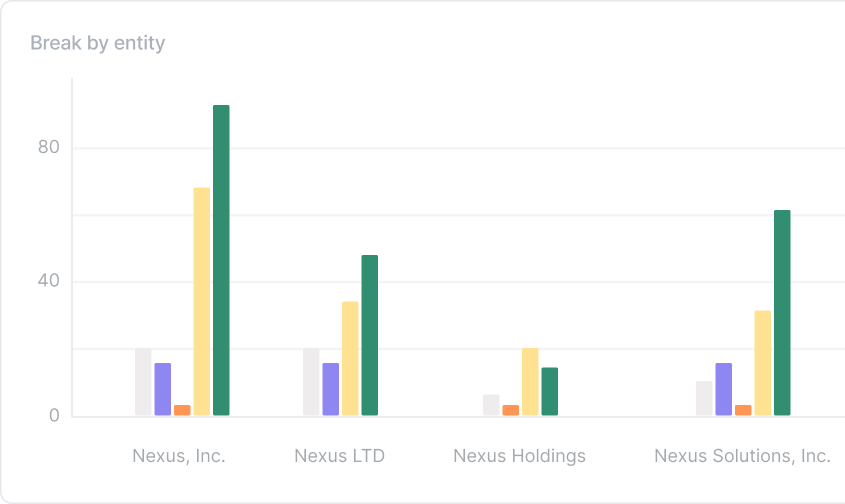
Make ownership and progress clear across the team
- Live visibility into task completion, overdue work, and blockers
- Preparer and reviewer assignments defined at the task level
- Filter and group tasks by entity, owner, category, or risk
- Email, Slack, and Microsoft Teams notifications so work moves forward without constant follow-ups
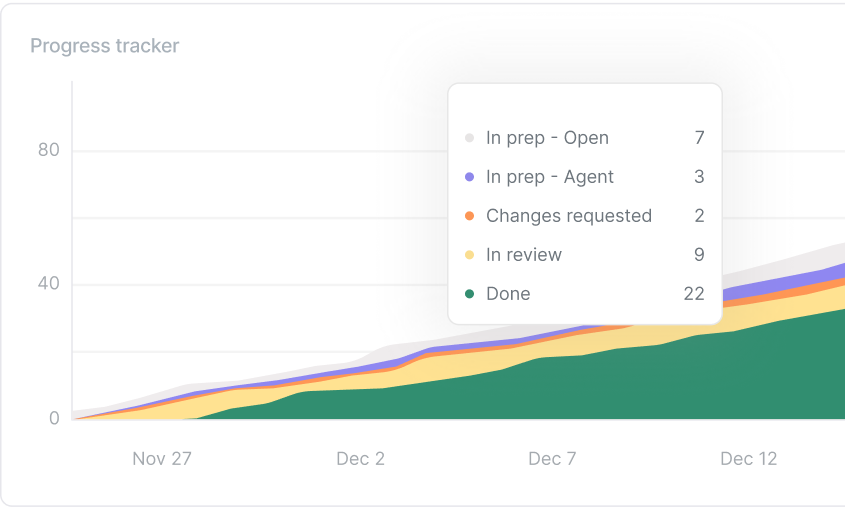
Keep the close moving without manual coordination
- Tasks are blocked until prerequisite work is complete
- Clear visibility into what can be worked on now — and what’s waiting
- Bottlenecks and handoffs surfaced in real time
- Less rework caused by missed dependencies or premature sign-offs
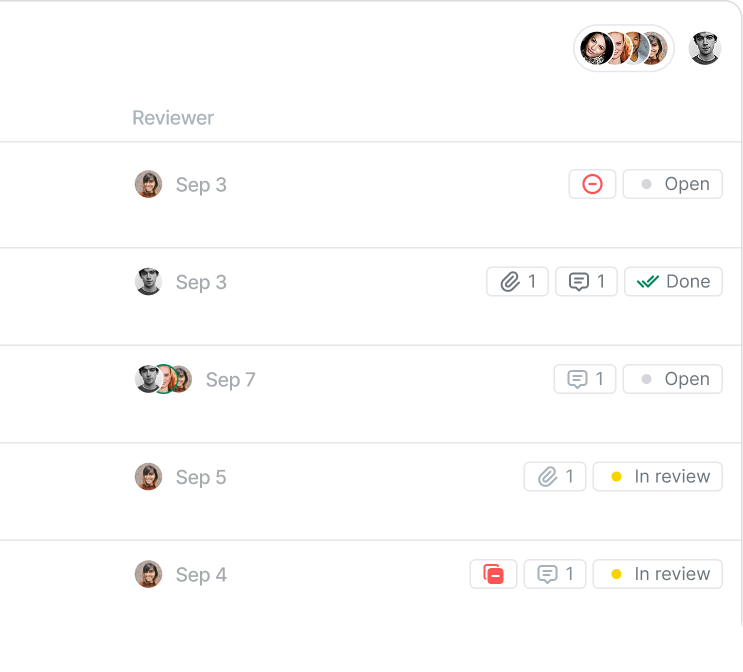
Move faster without weakening controls or audit readiness
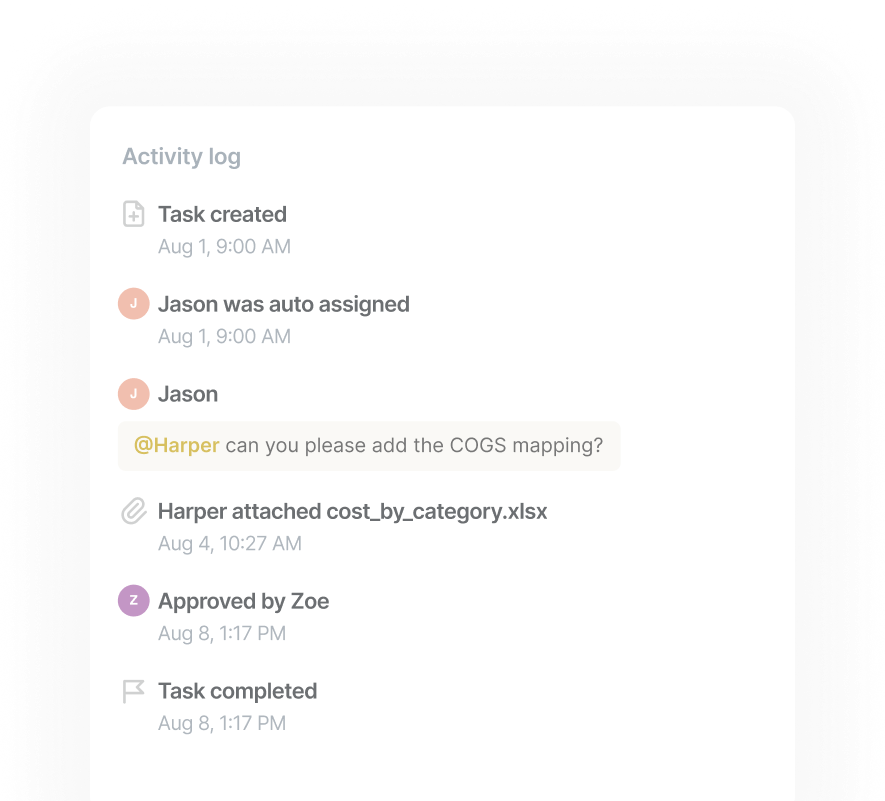
- Every task change, approval, reopening, and comment logged automatically
- Supporting documentation attached directly to close tasks
- Integrations with document storage systems like Google Drive
- A complete, defensible audit trail without extra documentation steps
Core capabilities


Why finance teams choose Ledge
FAQ


Most close management tools track tasks — they show you what needs to be done and whether it's been checked off. Ledge executes the tasks. AI accountants are embedded in each checklist item and do the actual accounting work: pulling data, building working papers, running reconciliations, and drafting journal entries. Your team reviews completed work instead of doing it from scratch.
Ledge customers typically move from 6-15 day closes to 3-5 day closes. The compression comes from eliminating manual preparation — AI accountants handle the rebuild that takes your team the first several days of close. The exact timeline depends on your current close complexity and the number of workflows automated.
Ledge replaces close management tools like FloQast and Numeric for most customers. One-third of Ledge's customer base previously used FloQast. Ledge handles both task tracking and task execution — you don't need a separate tracker.
Ledge connects to NetSuite in hours. Setup and configuration take one week. Your first AI agent goes live within two weeks. A fully agentic close — where agents handle the majority of preparation work — runs within 30 days. Onboarding includes a dedicated Onboarding Manager and Customer Success Manager at no additional cost.
Tasks are automatically blocked when prerequisites aren’t complete, making dependencies visible to everyone. Ledge highlights bottlenecks in real time and sends smart reminders through Slack, Teams, or email — reducing the need for manual follow-up.
Yes. Most teams start with 2-3 high-pain workflows — typically prepaids and accruals, or bank reconciliations — and expand after proving value. Ledge's workflow-based pricing means you pay for what you use, and adding workflows is straightforward.
Ledge auto-detects new GL accounts, custom segments, and subsidiaries in NetSuite. When your company adds an entity or acquires a business, Ledge automatically creates the required reconciliation and flux tasks. No manual configuration needed, no IT tickets, no consulting engagement.
Run the close without chasing updates
When the close runs as a coordinated system, your team spends less time managing work and more time reviewing results.