The state of the close, as it is, not as it was last reported
A live view of where every close task stands, across entities and teams. Not a dashboard someone has to update. Statuses, owners, dependencies, and evidence stay current because the work is happening inside the same platform, so the overview is true without anyone chasing updates.
Always know where your close stands
Status nobody has to gather
- Live status across every entity, team, and period
- No manual status updates, ever
- Real state, not reported state, because the work happens in the same platform
- The status meeting becomes a two minute glance
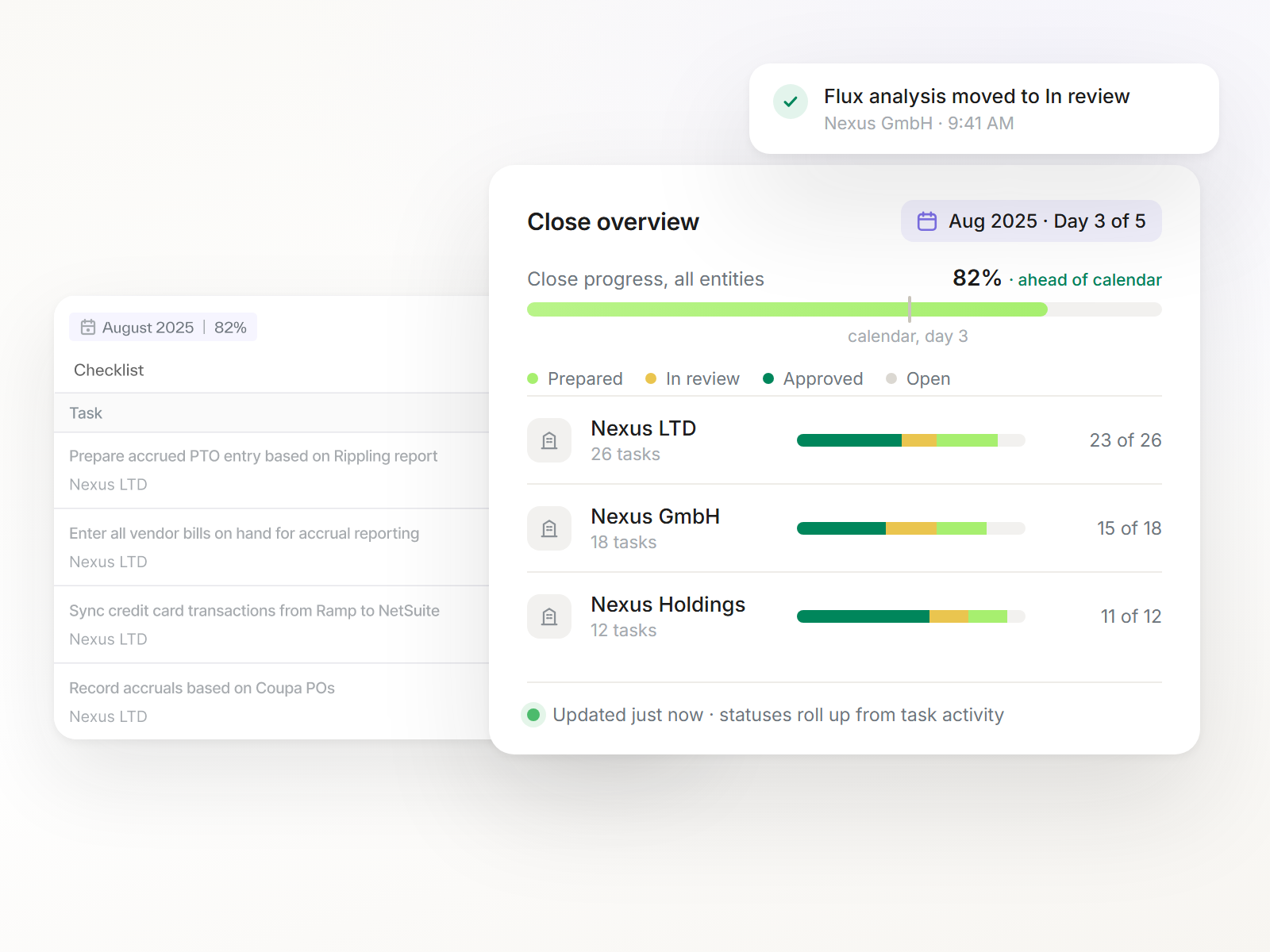
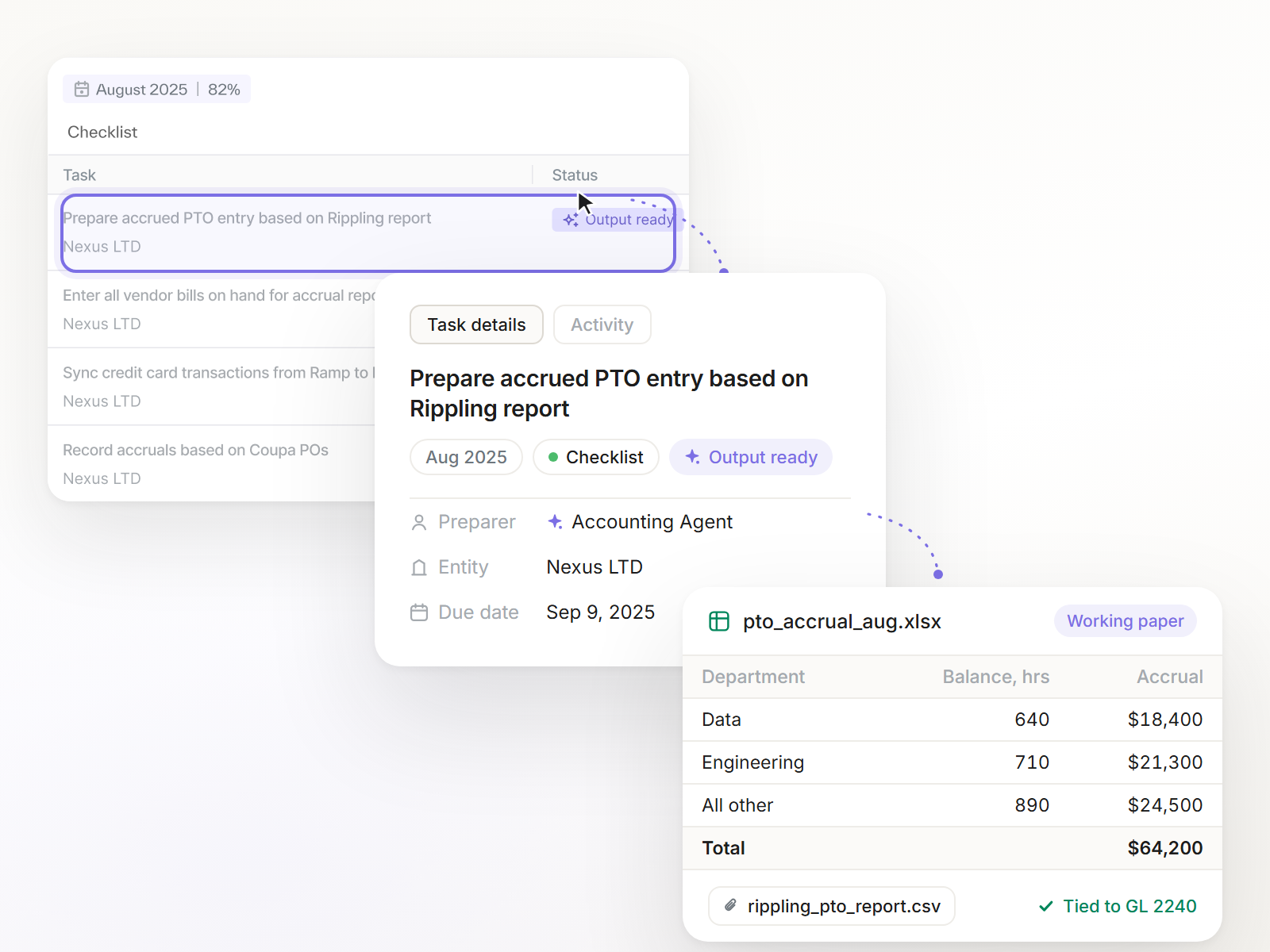
From rolled up status to source data in one click
- Every status rolls up from the task behind it
- Open any task to the prepared working paper, reconciliation, or journal entry
- Every balance traces back to source data
- Nothing is a number on a slide, everything is one click from its evidence
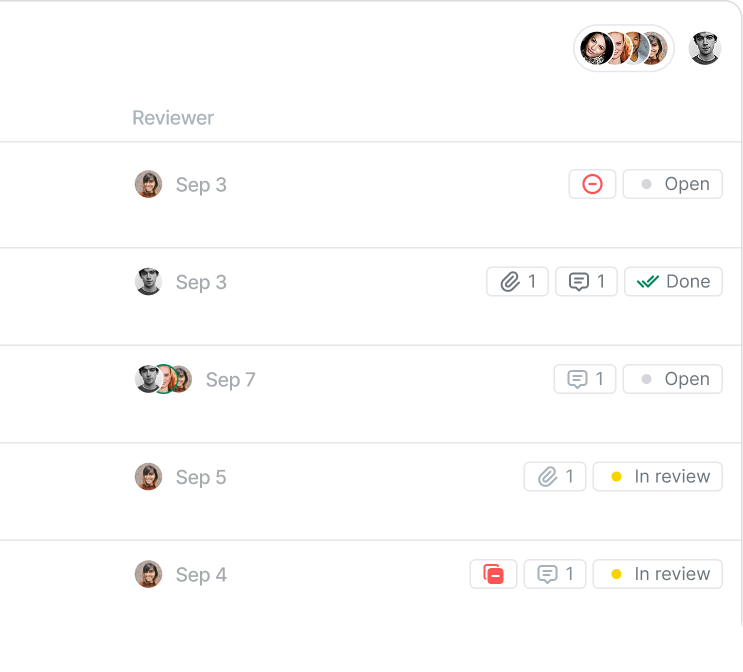
Filter the close to what each reviewer owns
- Views by entity, owner, category, or risk
- Preparer and reviewer ownership visible on every task
- Progress against the close calendar, where you stand vs. where you should be
- One view for the controller, a focused list for each reviewer
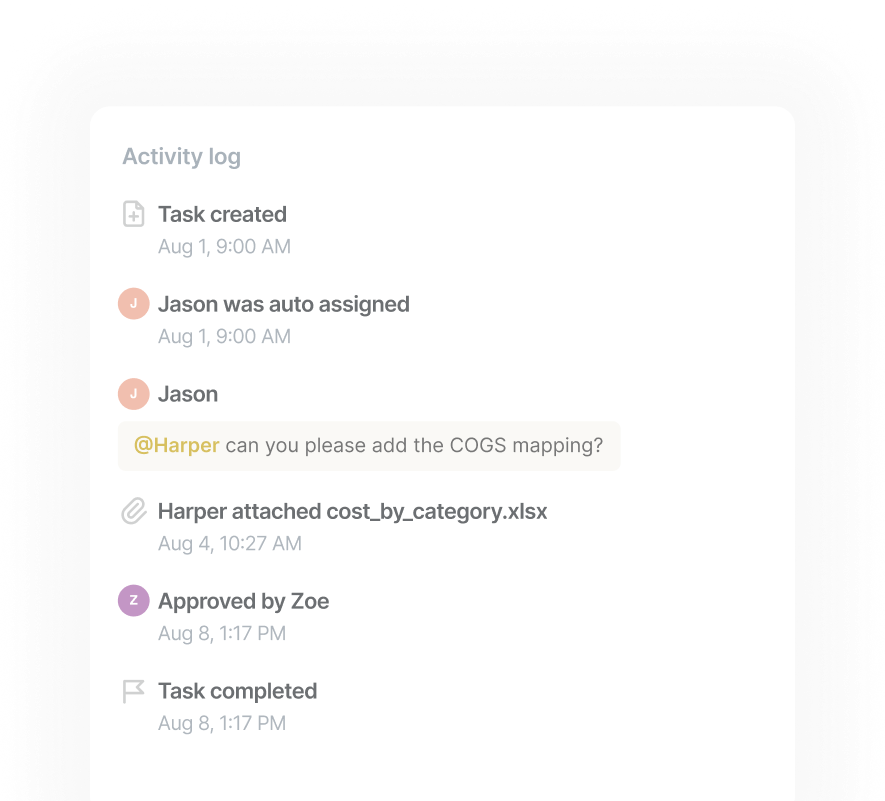
Evidence lives where the status lives
- Prepared work and backup attached to every task
- Every change, approval, and sign off logged automatically
- Sampling starts from work that is already documented
- The audit trail builds as the close moves, not as a project after
Core capabilities


Why finance teams choose Ledge
FAQ


A dashboard reports what someone typed into it. The Ledge overview reflects the actual state of the work, because the work happens in the same platform. Nobody updates it and nobody can forget to.
Yes. Status, ownership, and dependencies roll up across entities and teams into a single live view, with filters for what each reviewer owns.
No. Task state changes as the work is prepared, reviewed, and approved. Status is never a separate chore.
Yes. Every status traces to the task and the evidence behind it, so sampling starts from work that is already documented, and the audit trail builds as you close.
Blockers surface as they occur and dependent tasks reflect the delay immediately, so the impact is visible the same day, with reminders through Slack, Teams, or email.
Yes. You see where the close stands against where it should be, by entity and by team, so review time goes to the balances and tasks that actually need attention.
Ledge auto-detects new GL accounts, custom segments, and subsidiaries in NetSuite. When your company adds an entity or acquires a business, Ledge automatically creates the required reconciliation and flux tasks. No manual configuration needed, no IT tickets, no consulting engagement.
See your close as it actually stands
Status is always current, so nobody has to gather it. Your team stops compiling status and starts directing the close.