The close that runs itself, and tells you where to look
An agentic close checklist that tracks every task, dependency, monitor, and cash position in real time. Assignments route automatically. Blockers surface before they cost a day. Status meetings become unnecessary because status is always current.
I go to get my coffee and when I come back maybe it's done.
”

The close moves forward on its own
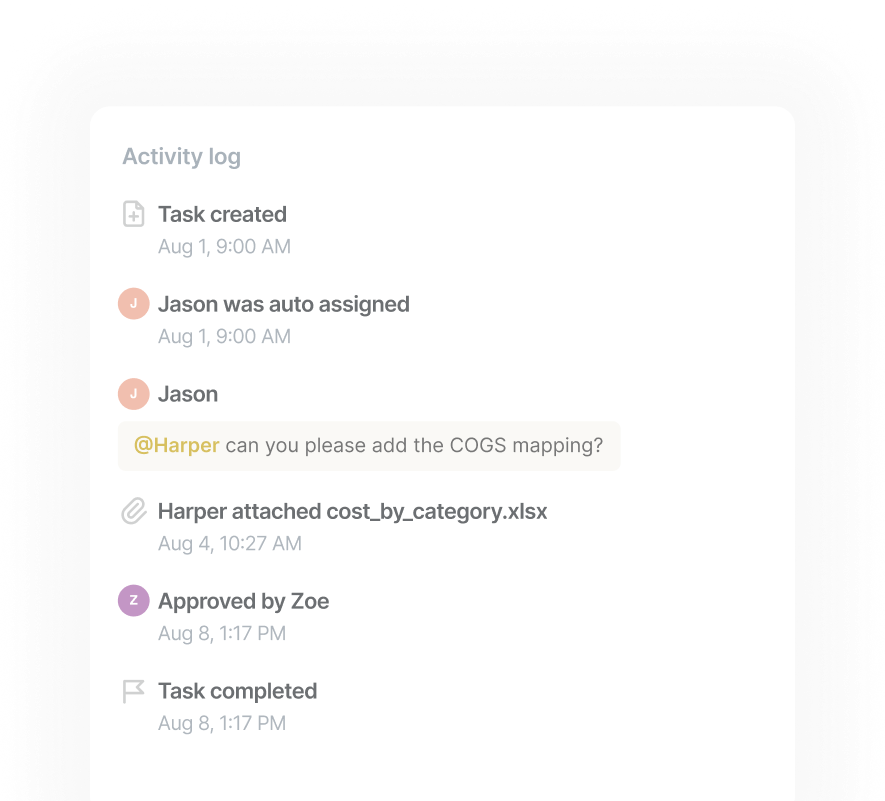
A checklist that does the work inside each task
- Every task, dependency, and monitor tracked live
- Accounting Agents execute inside each task while the checklist manages them
- Assignments and handoffs routed automatically
- Your team opens to reviewed output, not a reminder to start
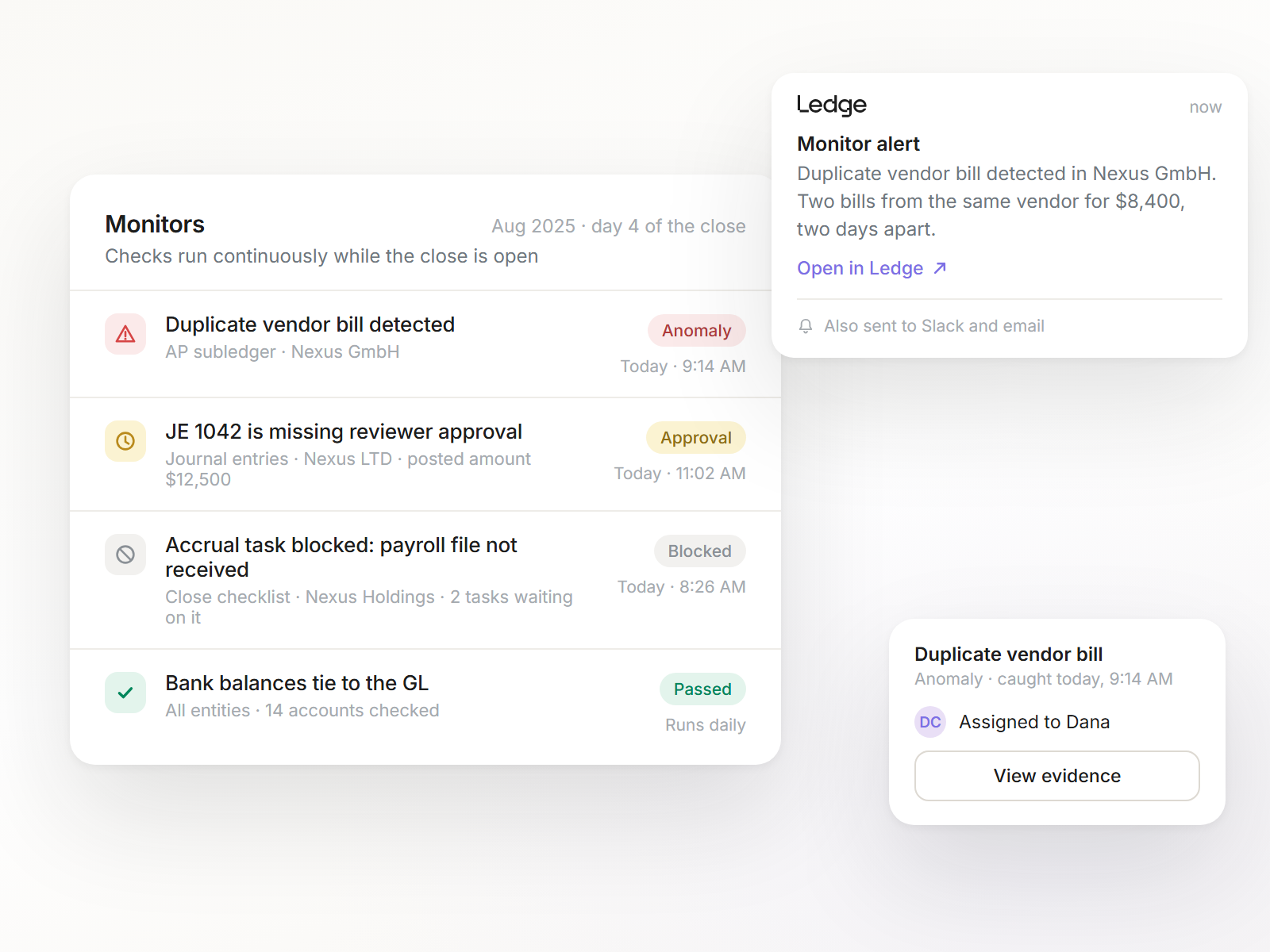
Catch the problem on the day it happens, not on day five
- Continuous anomaly detection across accounts and entities
- Missing approval and blocker alerts
- Dependent tasks reflect delays immediately
- Email, Slack, and Microsoft Teams alerts, so issues reach the owner the same day
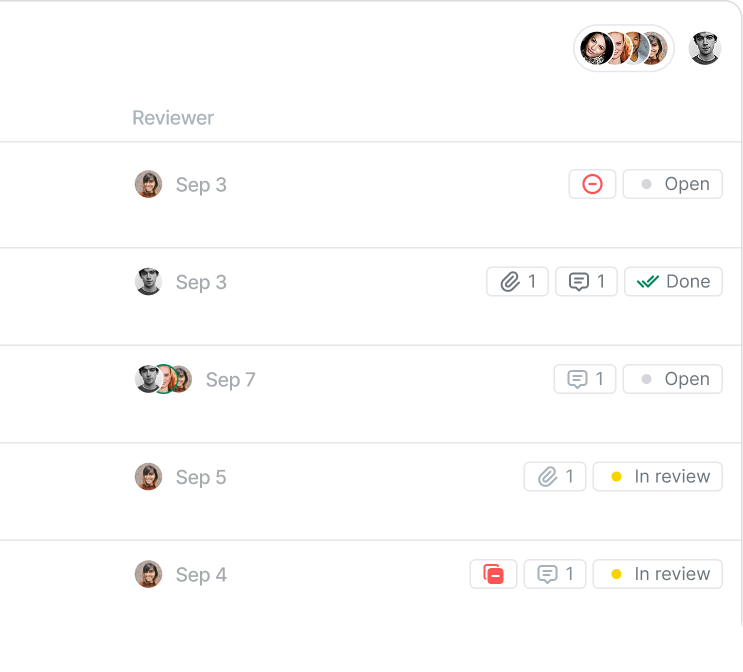
Keep the close moving without manual coordination
- Tasks are blocked until prerequisite work is complete
- Clear visibility into what can be worked on now and what is waiting
- Bottlenecks and handoffs surfaced in real time
- Less rework caused by missed dependencies or premature sign-offs
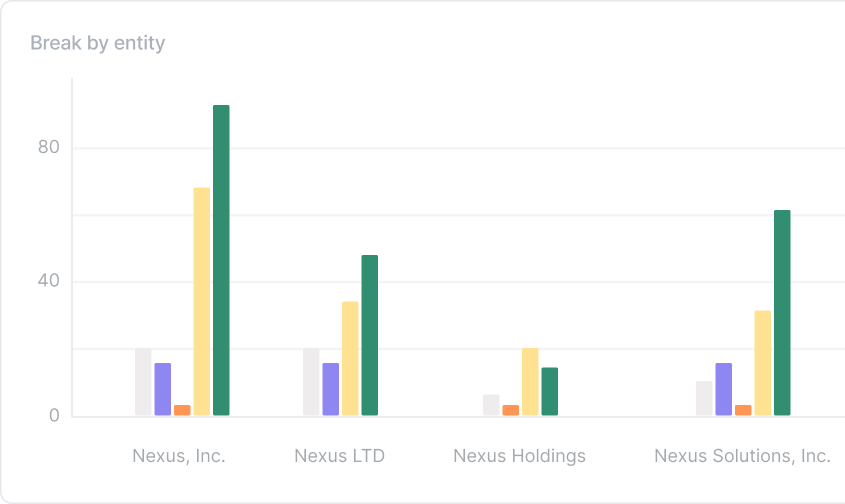
Where the cash is, in real time, across every account
- Live positions across every account
- Tied to continuous transaction level reconciliation
- No day old cash snapshots
- Cash visibility inside the same close workspace
Core capabilities


Why finance teams choose Ledge
FAQ


A checklist tool organizes the close. Ledge organizes it and prepares the work inside every task. Your team opens to reviewed output rather than a blank spreadsheet, which is the part a checklist cannot change.
Ledge customers typically move from 6 to 15 day closes to 3 to 5 day closes. The compression comes from removing manual preparation: Accounting Agents handle the rebuild that used to take the first several days of close. The exact timeline depends on your close complexity and the number of workflows prepared.
Ledge replaces close management tools like FloQast and Numeric for most customers. One third of Ledge's customer base previously used FloQast. Ledge handles both task tracking and task execution, so you do not need a separate tracker.
Ledge connects to NetSuite in hours and setup takes about a week. Your first Accounting Agent goes live within two weeks, and a fully agentic close, where Accounting Agents handle most of the preparation work, runs within 30 days. Onboarding includes a dedicated onboarding manager and customer success manager at no additional cost.
Tasks are blocked until prerequisite work is complete, so dependencies are visible to everyone. Ledge highlights bottlenecks in real time and sends reminders through Slack, Teams, or email, which cuts manual follow up.
Yes. Most teams start with two or three high pain workflows, typically prepaids and accruals or bank reconciliations, and expand after proving value. Workflow based pricing means you pay for what you use, and adding workflows is straightforward.
Ledge auto-detects new GL accounts, custom segments, and subsidiaries in NetSuite. When your company adds an entity or acquires a business, Ledge automatically creates the required reconciliation and flux tasks. No manual configuration needed, no IT tickets, no consulting engagement.
Run the close without chasing it
Assignments, handoffs, and escalations move on their own, so you lead the close instead of administering it, and review time lands where it matters.