Open the task. The work is done.
Accounting Agents prepare the work inside every close task. Data pulled, formulas built, exceptions flagged, journal entries drafted. Your team opens to reviewed output instead of blank spreadsheets, and the preparation that consumed days becomes minutes of review.
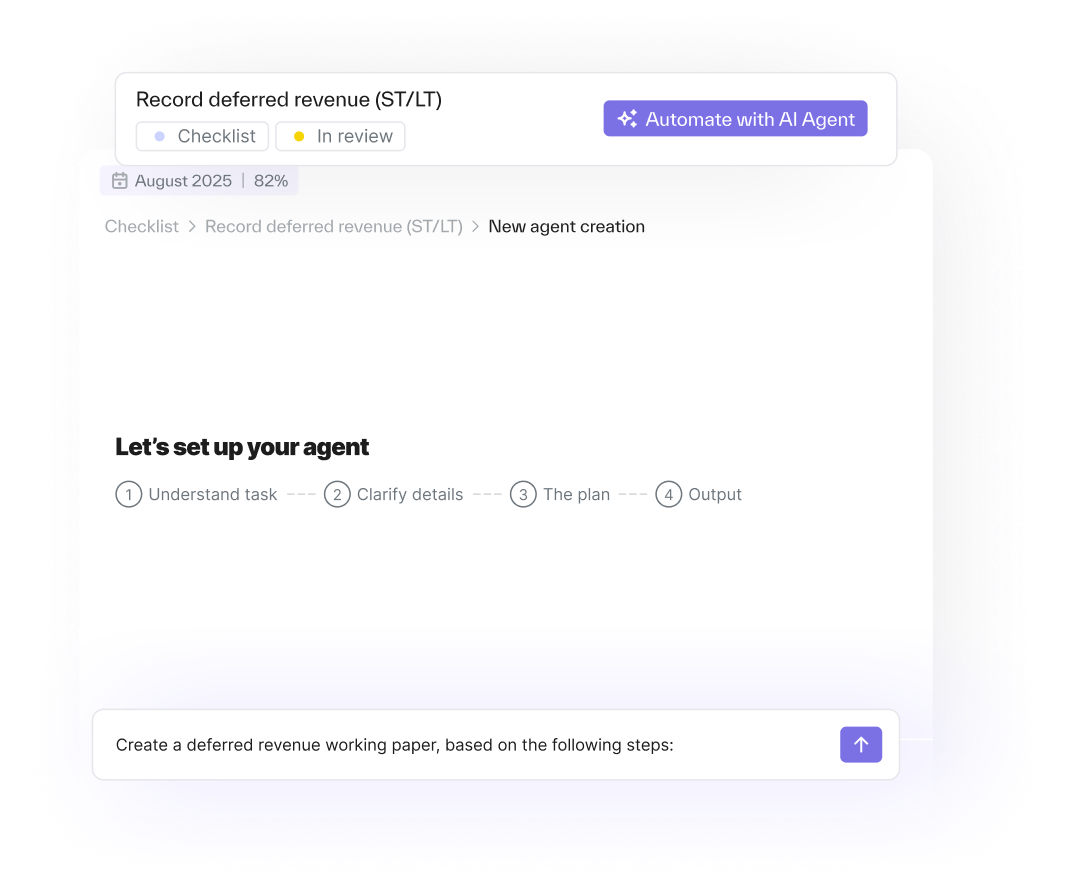
Turn any spreadsheet workflow into an Accounting Agent
Every team runs its close differently. Ledge adapts to yours.
Describe how your workflow runs: the data it uses, the structure you expect, and the way you tie things out. The Accounting Agent learns your workflow, asks for input when something is unclear, and reproduces your version every period.
Whether your process uses POs, bills, payroll data, allocations, entity rules, or something unique to your business, the Accounting Agent follows your exact approach.

It's like the dream employee.
”

Every deliverable, prepared by Accounting Agents
The monthly rebuild ends here
- Working papers your team maintains today, prepared for you: prepaids, accruals, intercompany, payroll, deferred revenue, and more
- Complete multi-tab spreadsheets with live formulas that mirror how your preparers structure them today
- An Accounting Agent on each task, so prepare the schedule becomes review the schedule
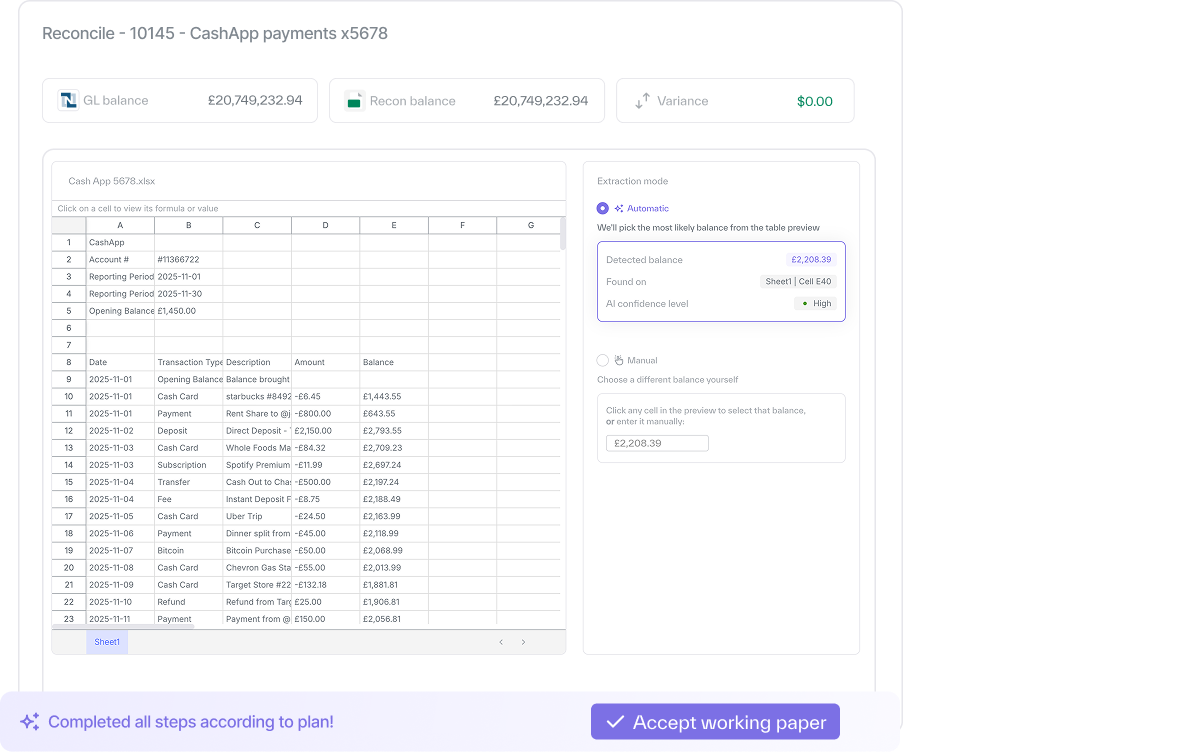
Pull data directly from NetSuite and your other systems
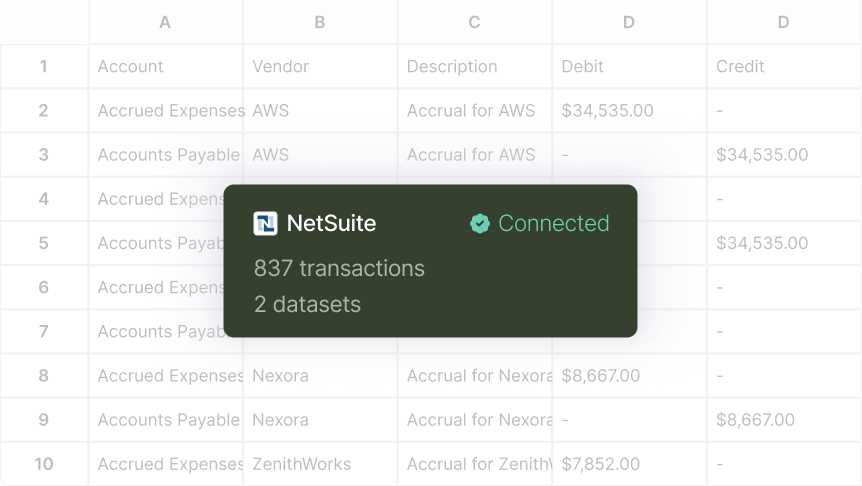
- Pull purchase orders, bills, prior accruals, journals, and more directly from NetSuite, banks, HRIS, AP, and hundreds of other integrations
- Keep every number fully traceable with dedicated source-data tabs and live formulas
- Give auditors and reviewers full visibility into how each balance ties back to its system of record
See exactly what the Accounting Agent did, and step in where judgment is needed
- Review the full log of reasoning, steps, and decisions behind each prepared task
- Approve or adjust proposed lines when the Accounting Agent encounters something new or ambiguous
- Teach it once. It learns from your corrections, so future runs do not repeat the same questions
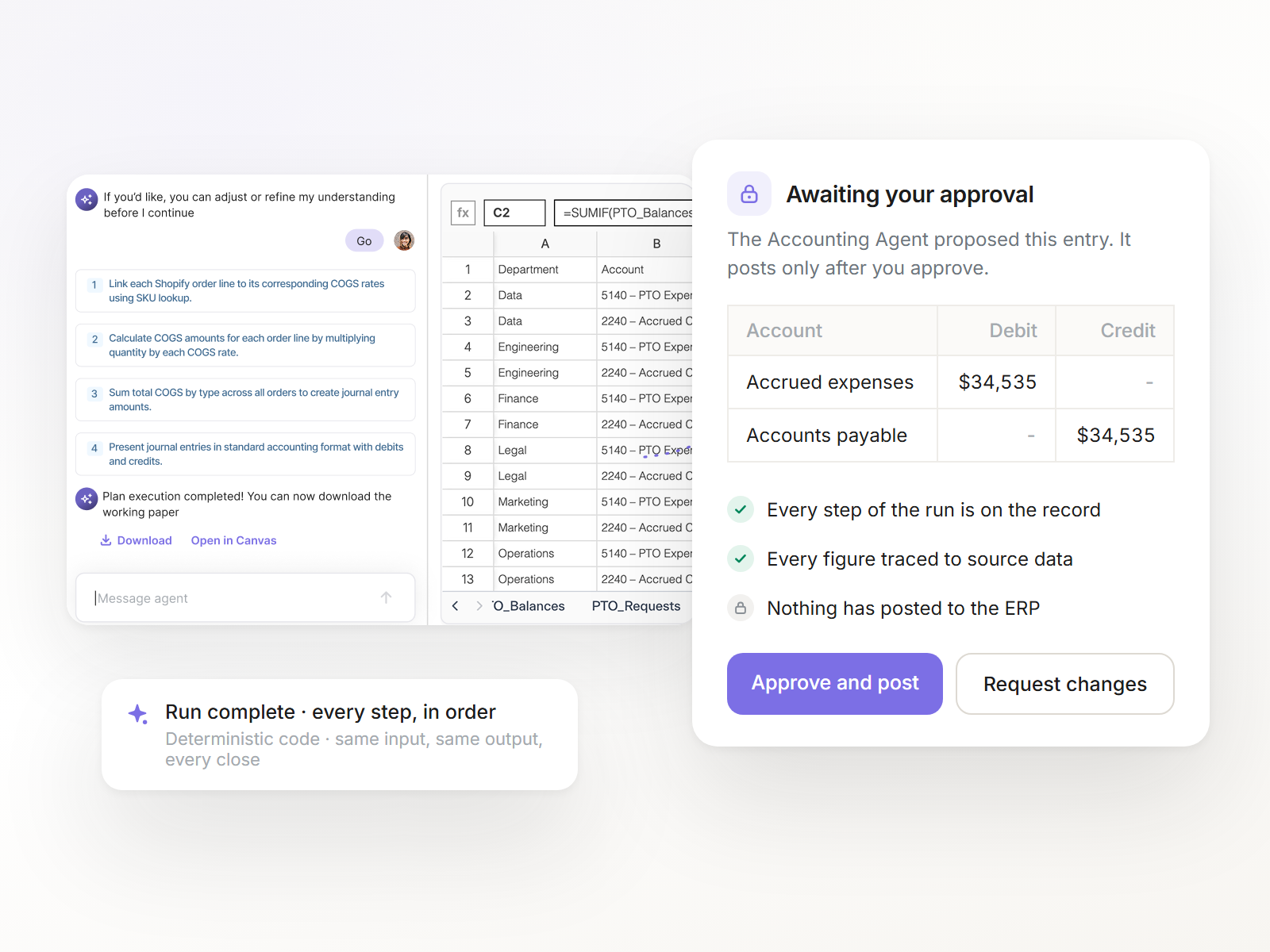
Every journal entry, prepared and posted when you approve
- Journal entry lines generated from the prepared working paper, no manual copying or reformatting
- Entries posted to NetSuite straight from Ledge once you approve, no templates or imports
- Keep the spreadsheet as the linked backup for audit and documentation

Core capabilities


Why finance teams choose Ledge
FAQ


Yes. Ledge generates multi-tab Excel workbooks with live formulas, rollforwards, source data tabs, and full traceability. These are native .xlsx files, not proprietary formats, locked views, or PDF exports. Your team works in the same medium they trust, without the manual preparation.
Yes. Every working paper includes a glass-box audit trail showing what data was pulled, what logic was applied, and how the output was derived. Source data is attached, formulas are live and inspectable, and rollforwards maintain period-over-period continuity. Auditors can trace any number back to its source.
You describe the workflow in natural language or upload an existing spreadsheet. Ledge analyzes the task and writes bespoke, deterministic code to replicate it. This is not a template, it is custom code written for your specific workflow, accounts, and business logic, and it runs reliably every period.
Ledge handles custom logic. If your prepaids schedule has unique amortization rules, or your revenue recognition has modified cash basis for certain streams, you describe the logic and bespoke code is written to execute it. The more specific your description, the more accurate the output.
No. Accounting Agents prepare working papers and present them for review. Your team inspects every output before it becomes the official record. If something looks wrong, you correct it and the Accounting Agent learns from the correction for future periods.
For most teams, 57 to 83% of the close workload is prepared for them. Low complexity tasks, roughly 60% of the close, are prepared at 90 to 100%. The manual rebuild, pulling data, pasting into Excel, rebuilding formulas, and updating rollforwards, is what Ledge ends.
Open your next close to reviewed output
The preparation that consumed days becomes minutes of review, and your team gets its time back.