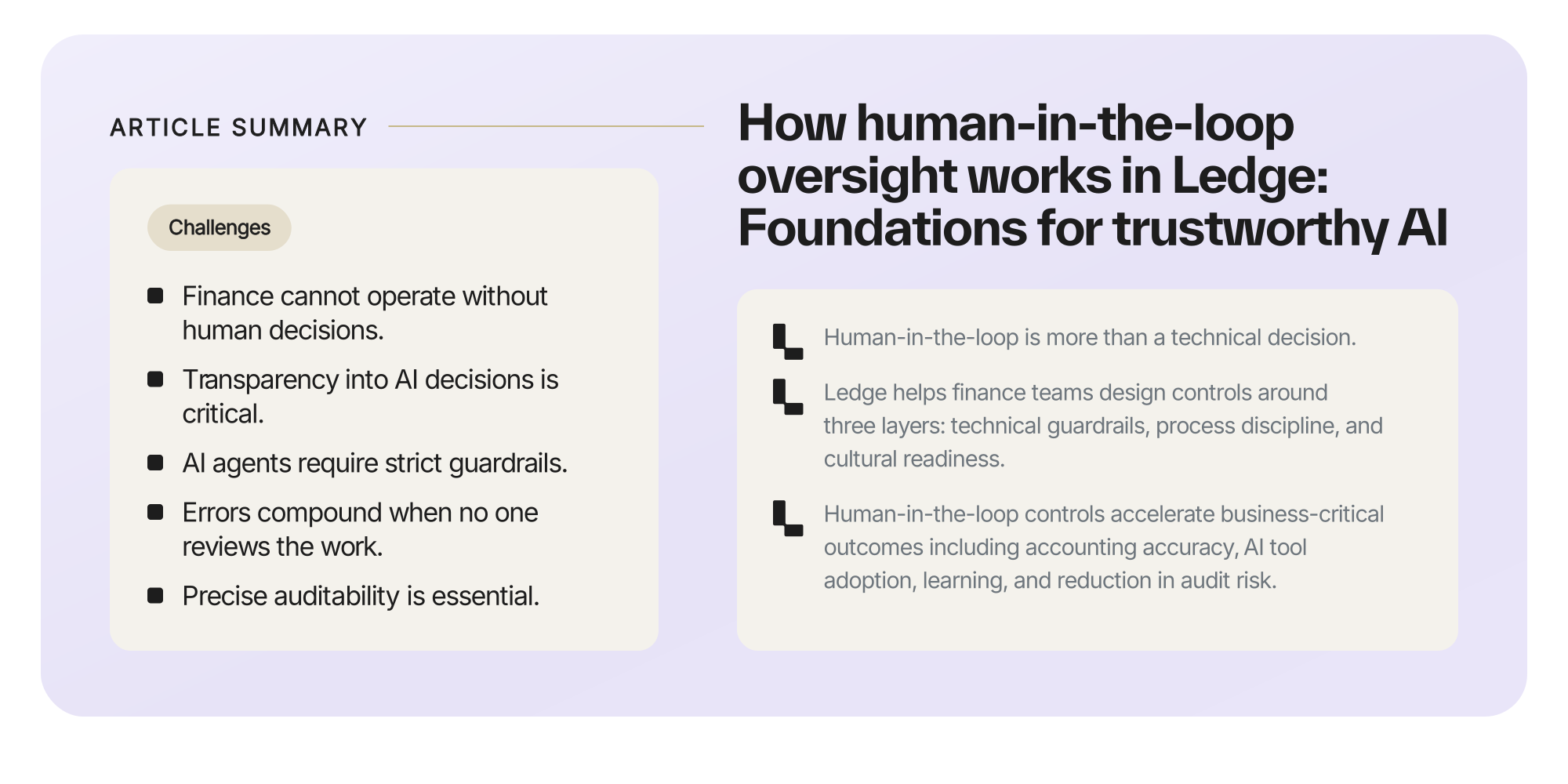
Human-in-the-loop oversight is critical to the adoption of agentic AI tools in finance. At Ledge, this principle shapes how our platform operates.
Finance teams create task-specific AI agents that follow the rules of predefined accounting workflows with clear logic, approval checkpoints, and built-in audit trails. AI prepares the work. Humans retain decision authority. The result is automation that accelerates the close while preserving control, transparency, and accountability.
Here’s a deeper look at how human-in-the-loop means in practice and how it works within Ledge.
What is human-in-the-loop control for finance?
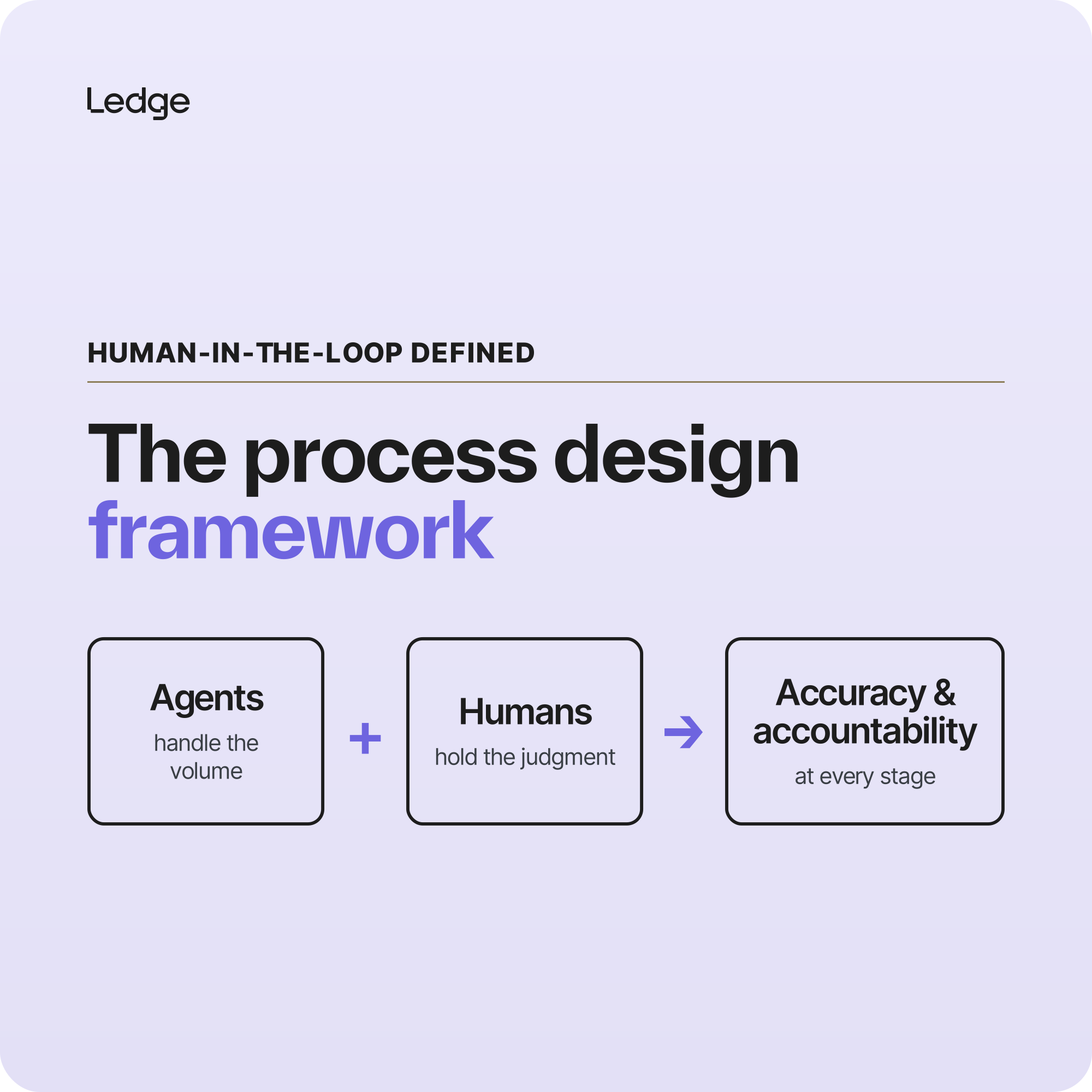
Human-in-the-loop (HITL) is a process design framework that blends automation with human oversight, ensuring accuracy and accountability at every stage of an AI-enabled workflow.
AI handles the repetitive, high-volume tasks (i.e. matching transactions, detecting duplicates, or drafting flux explanations) while finance teams validate outputs, investigate anomalies, and make final approvals.
HITL processes reposition people at the points where their judgment adds the most value. It’s automation that finance teams can trust, because humans remain in control. A well-architected HITL process ensures AI never operates as a “black box.” Every action has a human checkpoint and an audit trail.
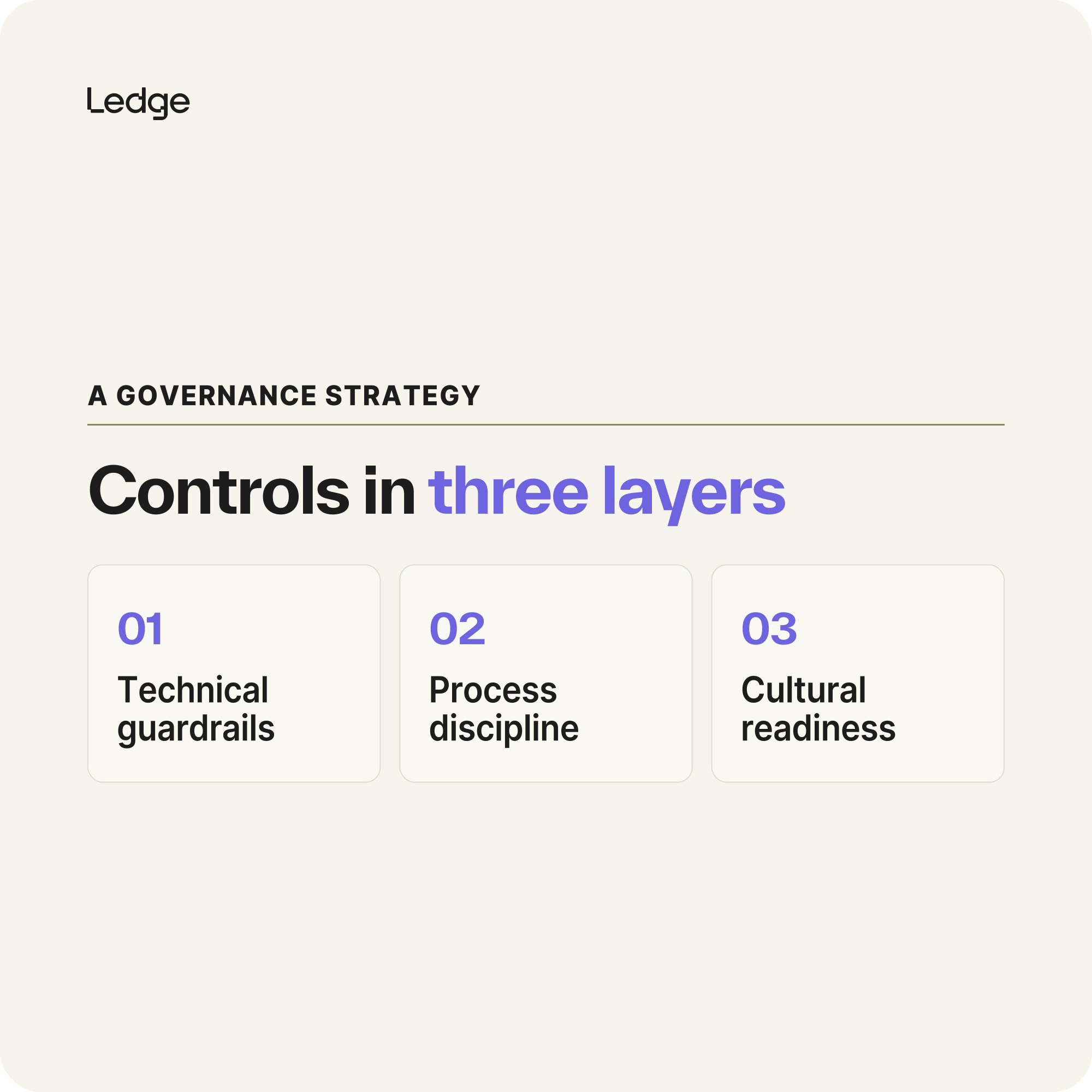
Human-in-the-loop is a governance strategy
Implementing human-in-the-loop AI is more than a technical decision. The most successful finance teams design controls around three layers.
Technical guardrails
Keep the ERP read-only for pilot workflows
Log every AI recommendation and reviewer decision for auditability
Process discipline
Define which tasks AI can perform autonomously (e.g., deterministic matching) and which require human validation
Document exceptions and outcomes so the model learns safely over time
Cultural readiness
Train teams to understand how AI makes recommendations: its inputs, confidence thresholds, and boundaries
Reinforce that automation is a collaborator, not a replacement. The goal is to move people up the value chain, not out of it
When these layers work together, finance teams gain the confidence to automate more aggressively without compromising accuracy or auditability.
The measurable benefits of human-in-the-loop control
In practice, human- in-the-loop controls accelerate outcomes.
Accuracy improves. Every AI suggestion is verified, reducing errors and reversals.
Adoption accelerates. Teams trust systems they can supervise.
Learning compounds. Human validation continuously improves model performance.
Audit risk decreases. Every action is logged, reviewed, and traceable.
How human-in-the-loop works in Ledge
In Ledge, human oversight is built directly into every agent workflow. Instead of generic automation, finance teams design task-specific AI agents and explicitly define where human judgment is required. Human-in-the-loop happens at five core control points:
Humans define the logic
Finance teams configure each agent’s scope, rules, thresholds, and approval steps.
AI executes routine work
Agents handle repetitive tasks like matching, drafting, and preparation.
AI escalates ambiguity
Exceptions, low-confidence results, and edge cases are flagged for review.
Humans review and approve
Finance validates outputs, investigates anomalies, and confirms accuracy.
Humans authorize posting
Final accounting actions (like journal entries) always require human signoff.
AI prepares. Humans decide. That structure keeps control firmly within finance.
HITL examples, by workflow
Working papers
Finance defines the workflow. Describe how your schedule works — the data it uses, the structure you expect, and how you tie it out. The agent follows your exact approach.
The AI agent prepares the working paper automatically, generating multi-tab spreadsheets with live formulas and pulling data directly from NetSuite and connected systems.
When the AI agent encounters something unclear, new, or ambiguous, it pauses and requests human input rather than guessing.
Finance reviews the completed schedule, sees the full log of the AI agent’s reasoning and steps, and approves or adjusts proposed lines before finalization.
Journal entries generated from the working paper require human review and approval before posting, with the spreadsheet preserved as linked audit backup.
Journal entries
Finance defines the logic — including structure, thresholds, and recurring patterns — and the agent follows your exact approach across accruals, reclasses, intercompany, FX, and other close workflows using real source data from NetSuite and connected systems.
The AI agent prepares journal entries automatically, generating lines directly from the spreadsheet backup it builds, with formulas and supporting schedules intact, while recurring logic carries forward prior-period mappings and structure so the close behaves the same way each month.
Context stays embedded. Each entry links back to the working paper, source-data tabs, and historical precedent used to prepare it, with a complete record of assumptions, reviewer notes, and changes kept inside the close task.
Finance reviews and approves, editing AI-prepared entries with full visibility into how every line was calculated.
Posting requires human authorization. Entries post directly to NetSuite from Ledge, with posting evidence captured automatically and attached back to the close task and spreadsheet backup.
Account reconciliation
Finance defines how each balance sheet account should reconcile — including comparison sources, timing expectations, and how discrepancies should be handled. The agent follows your exact approach across banks, subledgers, accruals, deferrals, payroll, and intercompany.
The AI agent continuously prepares reconciliations across every balance sheet account, comparing GL balances to banks, subledgers, payroll, and intercompany reports as activity happens.
When missing, mistimed, or misclassified transactions are detected, the AI agent surfaces discrepancies immediately rather than waiting until month-end.
Finance reviews discrepancies with full context — seeing what changed and why, tied directly to the underlying source data.
Humans decide corrective action, preparing accruals, true-ups, FX adjustments, eliminations, or reclassifications directly from reconciliation context — with every adjustment fully traceable and preserved in a complete audit trail.
Cash application
Finance defines how cash should be applied — including invoice matching rules, entity relationships, and how short pays, overpays, and edge cases should be handled. The agent follows your exact approach.
The AI agent handles messy data, matching shorthand memo lines like "inv 1234–8," extracting remittance data from PDFs, emails, and shared inboxes, and matching payments using full transaction and entity context.
When the AI agent encounters short pays, overpays, or ambiguous scenarios, it surfaces suggested resolutions backed by full context and history rather than applying changes automatically.
Finance reviews the suggested resolutions and makes the final decision.
Decisions become reusable logic. Prior resolutions are saved, so when the same patterns repeat, the system applies your historical judgment automatically.
Payment reconciliation
Finance defines the reconciliation workflow — which systems to match, how payouts, refunds, and chargebacks should tie out, and how exceptions should be handled.
The AI agent performs matching at scale, reconciling payments despite inconsistent timing, partial references, rounding differences, and messy or unstructured data.
When the AI agent encounters FX variances, timing differences, platform fees, or unclear exceptions, it surfaces them with full context rather than forcing a match.
Finance resolves exceptions in one place — assigning ownership, tracking resolution status, and reviewing all supporting data.
Finance maintains real-time oversight of what’s reconciled, what’s delayed, and what may impact close.
Human-in-the-loop as critical infrastructure
In Ledge, human-in-the-loop is core infrastructure.
AI handles scale and repetition. Finance teams retain control over decisions, approvals, and outcomes. Every workflow stays visible. Every action is traceable.
That’s how automation becomes dependable rather than risky. And how finance teams move faster without giving up accountability.
Disclaimer: This content is provided for general educational and informational purposes only and should not be relied upon as accounting, financial, legal, tax, or other professional advice. Readers should consult their organization's internal subject matter experts and qualified professional advisors before making decisions based on this information. Any examples, estimates, or performance outcomes are illustrative only, and actual results will vary depending on an organization's specific circumstances, systems, controls, and implementation.
Explore how AI agents fit into your close process
See how task-specific AI agents can help you prepare work, surface exceptions, and accelerate the close without sacrificing oversight.