

There are a growing number of AI accouting tools available for the month-end close. The question is which approach is the best fit for your team.
You can build workflows internally using Claude, Gemini, or ChatGPT, for instance. You can hire consultants. You can add headcount. You can start using the AI features that are already present within your existing platform. Or you can adopt a purpose-built platform designed specifically for your accounting challenges.
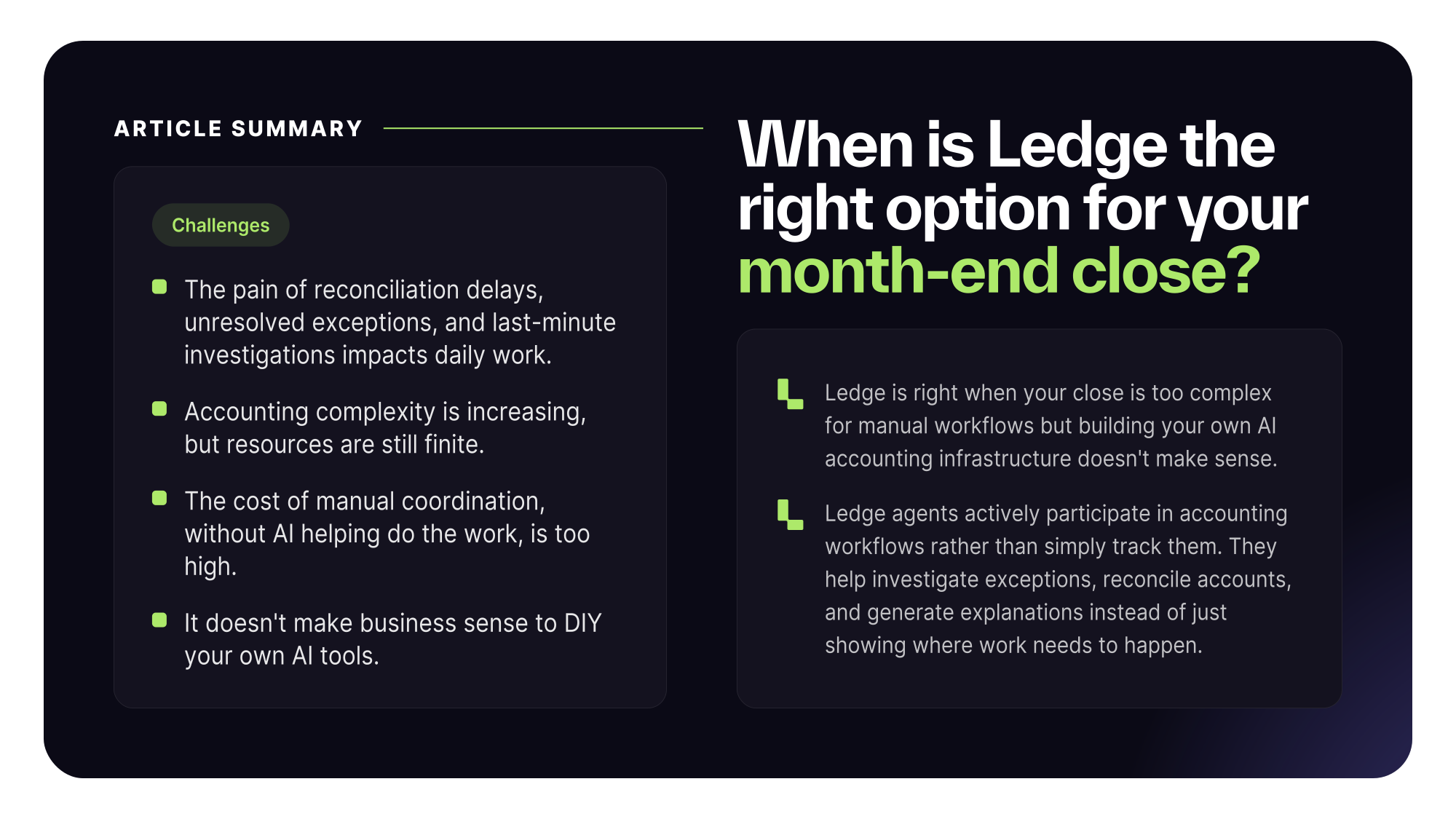
Ledge is the right option when your close process has become too complex for manual workflows—and you know AI can help solve the problem—but building and maintaining your own AI-powered accounting infrastructure doesn't make sense.
A checklist to determine your fit for Ledge
Finance teams that get the most value from Ledge typically share several of the following characteristics:
You understand the “why” behind the pain point
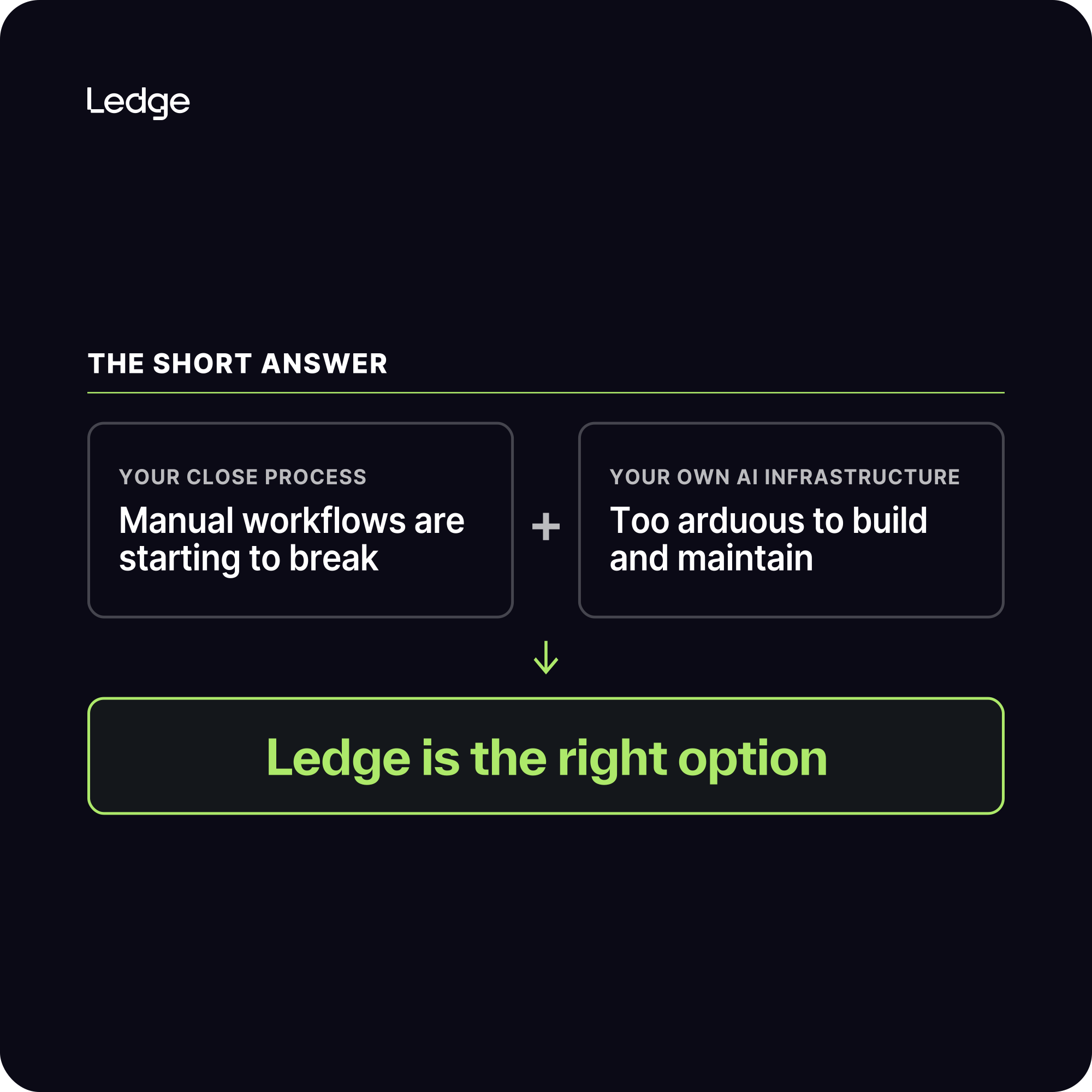
Ledge is built primarily for accounting managers, controllers, assistant controllers, VPs of Accounting, and other accounting leaders responsible for getting the books closed.
These are the people who feel the pain of reconciliation delays, unresolved exceptions, and last-minute investigations. When an account doesn't tie out, it lands on their desk first.
Your company has outgrown simple processes
Ledge is generally a fit for mid-market and small enterprise organizations rather than very small businesses or global enterprises with highly customized finance stacks.
At this stage, accounting complexity has become meaningful, but resources are still finite. Teams need better ways to scale operations without simply adding more people.
Multiple people work on the close
When several accountants are involved in the close, coordination becomes part of the challenge. Teams need visibility into who owns which reconciliations, where exceptions are stuck, and what work remains before the books can be finalized.
As team size increases, the cost of manual coordination increases with it.
You have real accounting complexity
The strongest indicator of fit is complexity.
That may include:
- Multiple legal entities or subsidiaries
- Intercompany transactions
- High transaction volumes
- Large numbers of accounts requiring reconciliation
- Frequent exception investigations
- Spreadsheet-heavy close processes that have become difficult to manage
A simple single-entity environment may not require this level of automation. A multi-entity organization managing hundreds of reconciliations often does.
The close feels like a recurring operational challenge
The best-fit customers don't view the close as an occasional inconvenience.
They view it as a recurring operational process that consumes meaningful time and attention every month. Teams spend hours gathering evidence, researching discrepancies, reconciling accounts, and preparing explanations for leadership.
These are the activities Ledge is designed to accelerate.
Who Ledge isn't for
Ledge is not the right fit for every finance team. You may want to consider a different approach if:
- One person handles the entire accounting function and the close process is relatively straightforward.
- Your company operates a single entity with a manageable number of accounts and limited reconciliation work.
- Most of the challenges in your close process stem from inconsistent processes, unclear ownership, or a lack of standardization rather than accounting complexity.
- You're primarily looking for budgeting, forecasting, FP&A, or strategic finance software.
- Your organization has the engineering resources, governance structure, and appetite to build and maintain accounting-specific AI workflows internally.
- Your finance team is part of a large enterprise with highly customized accounting systems and established internal automation programs.
In these situations, simpler software, process improvements, or internally developed solutions may be a better fit.
Ledge delivers the most value when accounting complexity, not just process friction, is the primary challenge.
Deeper discussion: Why Ledge exists in the market
Most teams evaluating AI for the close are deciding between traditional close management software and building custom workflows themselves. Ledge was designed for teams that wanted a different option to fix the pain point more directly.
Ledge combines accounting workflows with AI execution
Ledge sits between traditional close management platforms and fully custom AI implementations. It goes beyond organizing close activities and status updates by helping teams investigate exceptions, gather supporting evidence, reconcile accounts, and generate accounting-ready explanations tied to underlying ERP activity.
Unlike traditional close management software, AI agents in Ledge actively participate in accounting workflows rather than simply track them. People on your finance team transition into review-focused roles.
And unlike custom AI projects, Ledge provides the integrations, controls, auditability, and operational foundation finance teams need to deploy AI in production. Teams can automate accounting workflows without taking on the burden of building and maintaining a custom platform.
Ledge Agent Studio reduces infrastructure burden
Many finance teams are experimenting with Claude, ChatGPT, Gemini, and other AI tools.
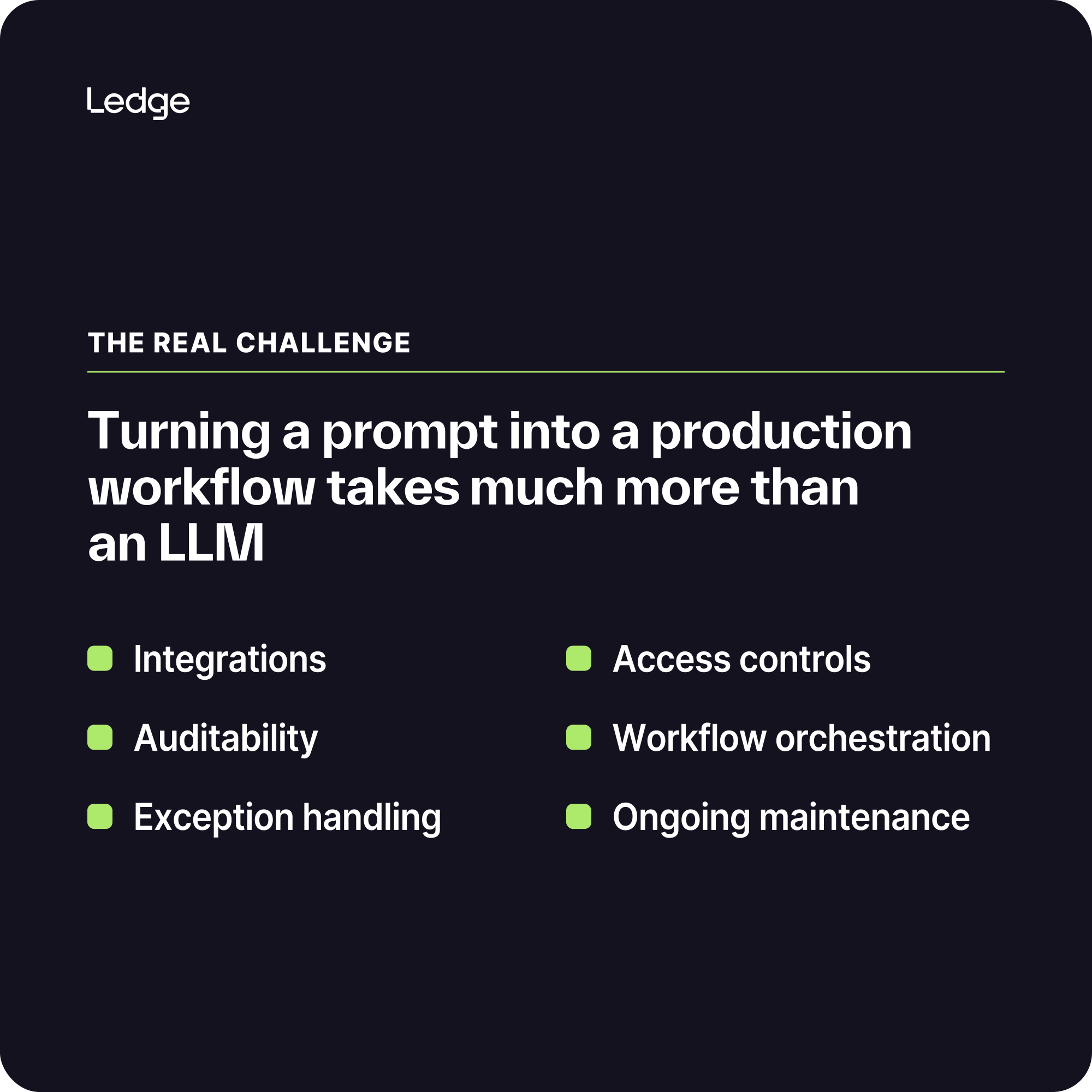
The challenge is that moving from a useful prompt to a production-ready accounting workflow requires much more than an LLM. Teams need integrations, access controls, auditability, workflow orchestration, exception handling, and ongoing maintenance.
Ledge gives finance teams the ability to build workflow-specific AI agents through Ledge Agent Studio without taking on that infrastructure burden. Rather than relying on a single general-purpose assistant, teams can create agents tailored to specific accounting processes, including flux analysis, account reconciliations, payment reconciliations, journal entry creation, and working paper prep.
This approach allows finance organizations to start with prebuilt workflows while maintaining the flexibility to adapt agents to their own processes, controls, and operating models. As accounting requirements evolve, teams can refine and expand their automation without rebuilding their AI infrastructure from scratch.
This creates a throughline between rigid software and custom development. Teams gain the flexibility to design workflows around their accounting processes while avoiding the cost and complexity of building an AI platform internally.
The bottom line: When Ledge is right for your team
Ledge is built for accounting leaders managing a complex close. If your team is juggling growing complexity and coordination overhead, Ledge was designed for your environment.