


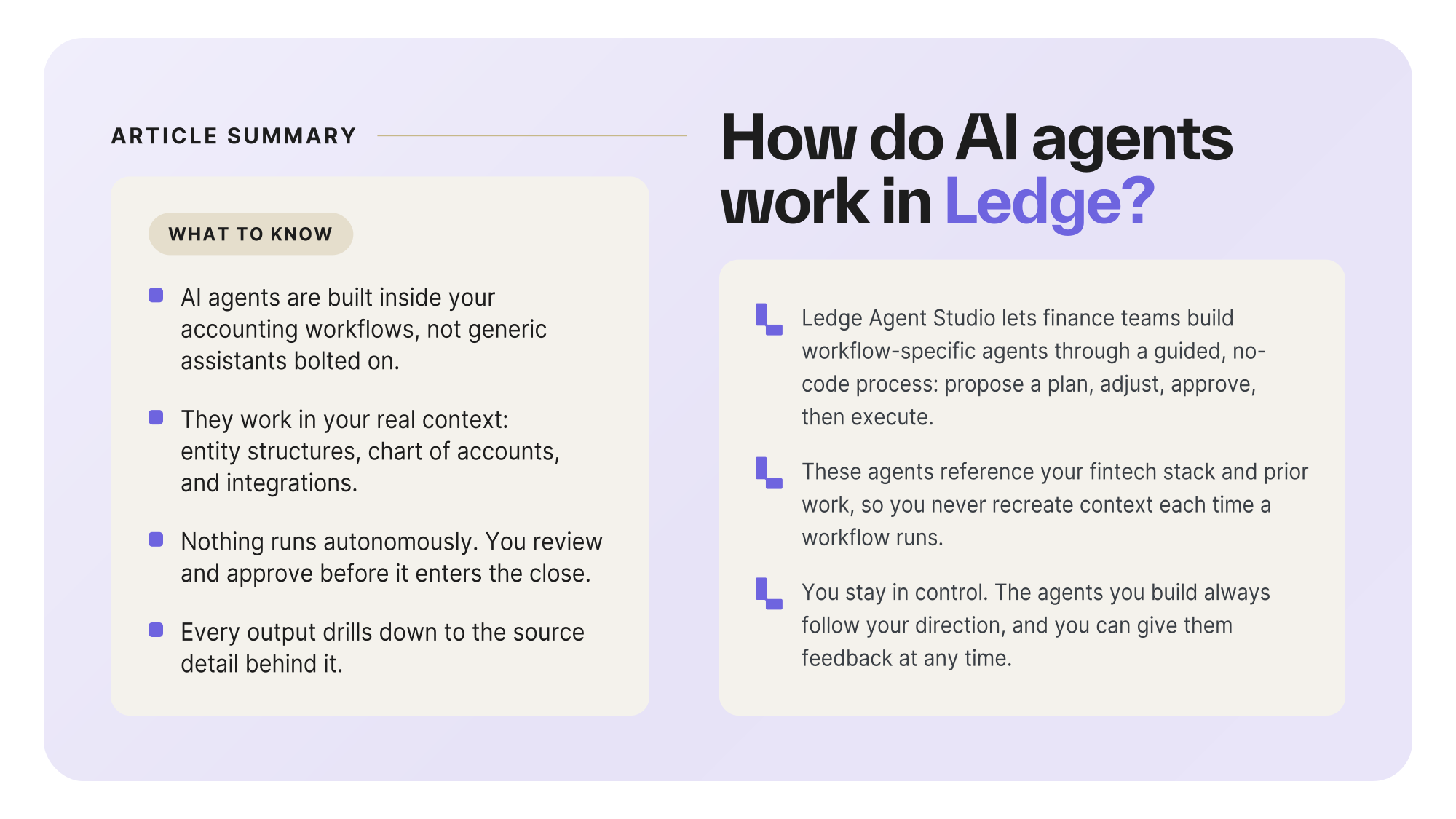
With Agent Studio, Ledge gives finance teams the ability to build their own AI agents in a no-code interface instead of relying solely on prebuilt automations. Finance teams can create agents for specific tasks, supervise how they work, and refine them over time as processes evolve.
Here's a closer look into how Ledge agents operate.
Agents work within accounting context
Agents built with Ledge Agent Studio sit on top of the accounting infrastructure where work is already being performed. Because agents are connected to the Ledge platform, they can work within the context of the organization's financial infrastructure, including entity structures, chart of accounts data, and integrations.
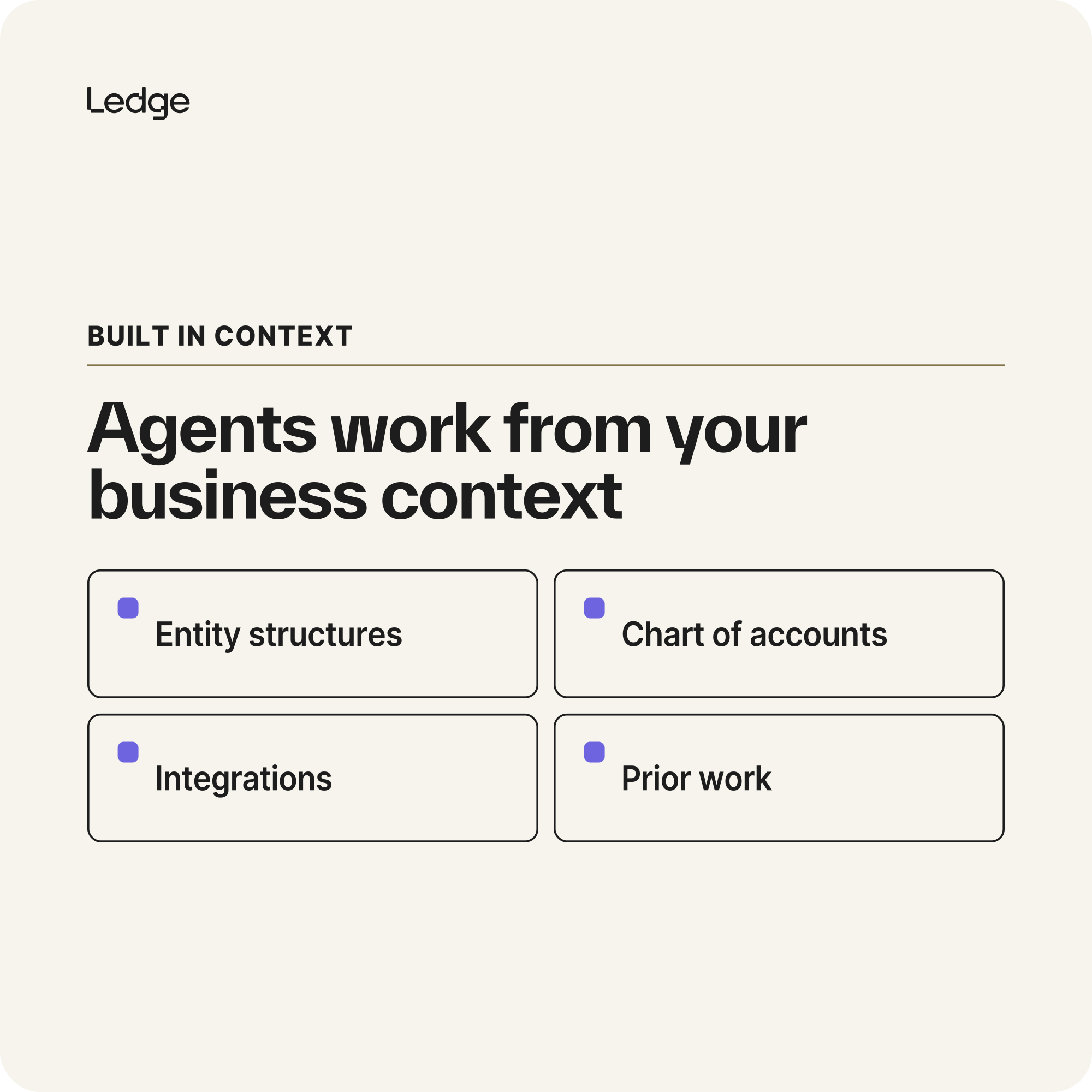
These Agents can also reference prior work that has already been completed within Ledge. Rather than requiring users to recreate context every time a workflow is executed, agents can use existing accounting information and prior task outputs as reference points.
This allows agents to operate within the same environment accountants use to manage reconciliations, reviews, investigations, and month-end close activities.
Agents built in Ledge never operate autonomously
Agents work within a supervised accounting workflow where finance professionals remain responsible for reviewing outputs, validating conclusions, and approving work before it becomes part of the close process.
As agents execute tasks, finance users maintain visibility into the approach being taken, the assumptions being made, and the information being used to produce results. Teams can review proposed actions, inspect supporting evidence, and determine whether additional investigation is required.
This human-in-the-loop approach reflects the realities of accounting work. Financial reporting, reconciliations, and close activities often require professional judgment, policy interpretation, and oversight that cannot be fully delegated to an AI system.
By keeping accountants involved throughout the process, Ledge helps organizations accelerate work while maintaining the controls, accountability, and review procedures required in finance environments.
Agent Studio provides structured guidance
Ledge Agent Studio is designed to help finance teams build and manage agents through a structured, guided process rather than requiring users to write code or build AI workflows from scratch.
As an agent is created, it proposes an approach to completing the task, identifies assumptions, and outlines the steps it intends to follow. Users can review the plan, adjust instructions, and approve the workflow before execution begins.
Because agents are built within the accounting environment and connected to underlying accounting systems, the platform can guide users through a governed process for creating and operating automation. Teams maintain visibility into how work will be performed, what assumptions are being made, and what steps the agent intends to execute.
Agents leverage pre-built accounting knowledge
For common accounting workflows, agents can leverage pre-built accounting knowledge and guidance designed to help teams get started more quickly. Rather than starting from a blank page, users can build on workflows informed by common accounting processes and then adapt them to their own requirements.
The goal is not to force teams into a predefined way of working. Instead, Ledge provides a foundation that helps organizations build automations faster while still allowing them to configure workflows around their own policies, controls, and operating procedures.
Full transparency with access to underlying detail
Ledge is designed to make agent outputs easy to review without obscuring the underlying work.
Because agents are integrated directly into the platform, finance team users can review outcomes at a high level while retaining access to the supporting calculations, transactions, and analysis behind those results.
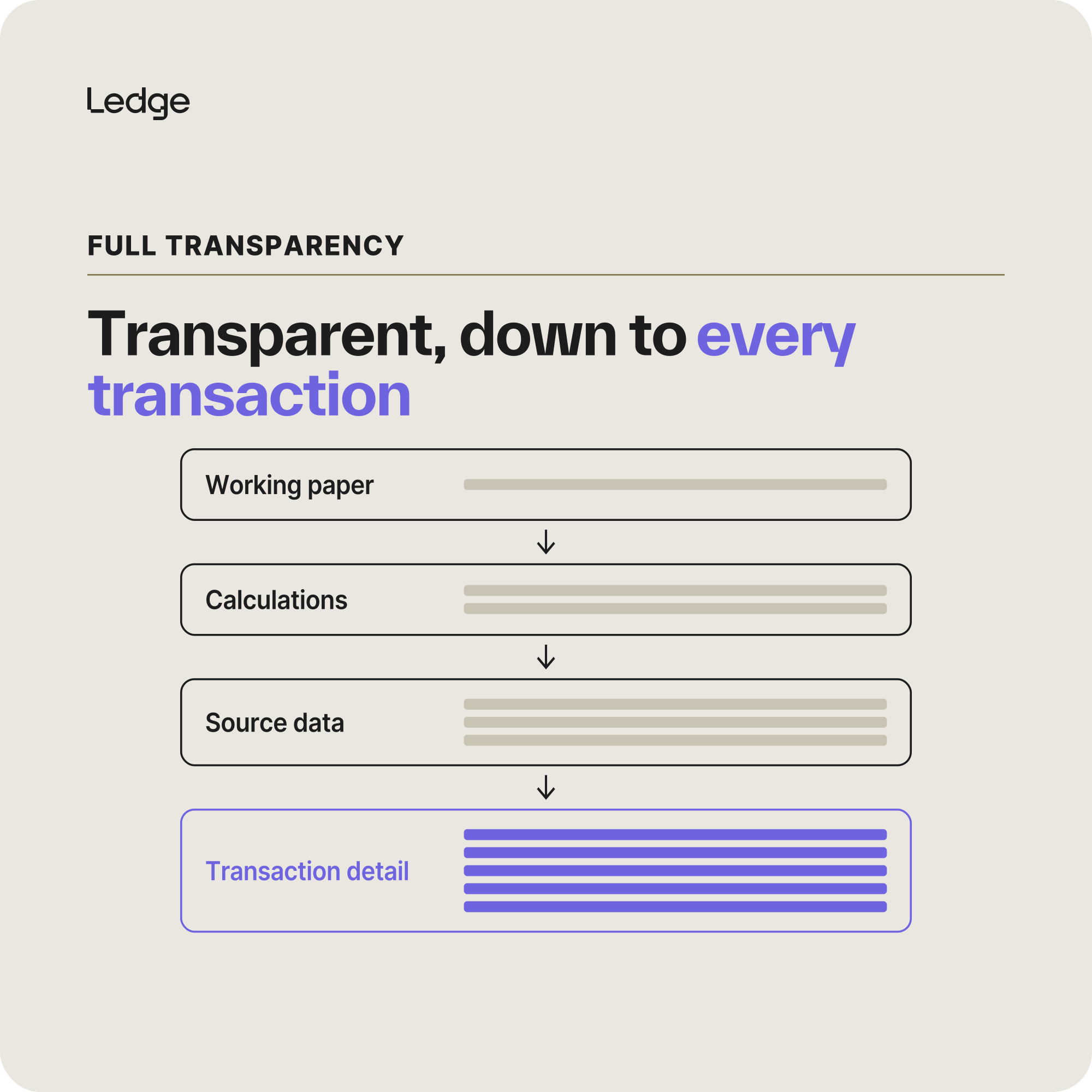
For example, a reviewer may begin with a completed working paper generated by an agent. From there, they can drill into the supporting calculations, source data, assumptions, and transaction-level detail used to produce the output.
This transparency allows teams to move efficiently between summary-level review and detailed investigation.
Rather than forcing users to choose between a black-box result and a large volume of raw data, Ledge provides a structured way to review both the outcome and the supporting work that produced it.
An ideal solution for finance teams
Accounting workflows require more than a capable language model. They require context, consistency, reviewability, and alignment with how finance teams actually operate.
By building agents directly within accounting workflows, Ledge allows finance teams to create automations that are tailored to their own close processes rather than relying on generic AI assistants or one-size-fits-all automations.
Because agents have access to accounting context, can reference prior work, and operate within structured workflows, they can be configured around the organization's existing policies, controls, review processes, and operating procedures. Teams can supervise how work is performed, refine workflows over time, and maintain visibility into both the outputs and the underlying analysis.
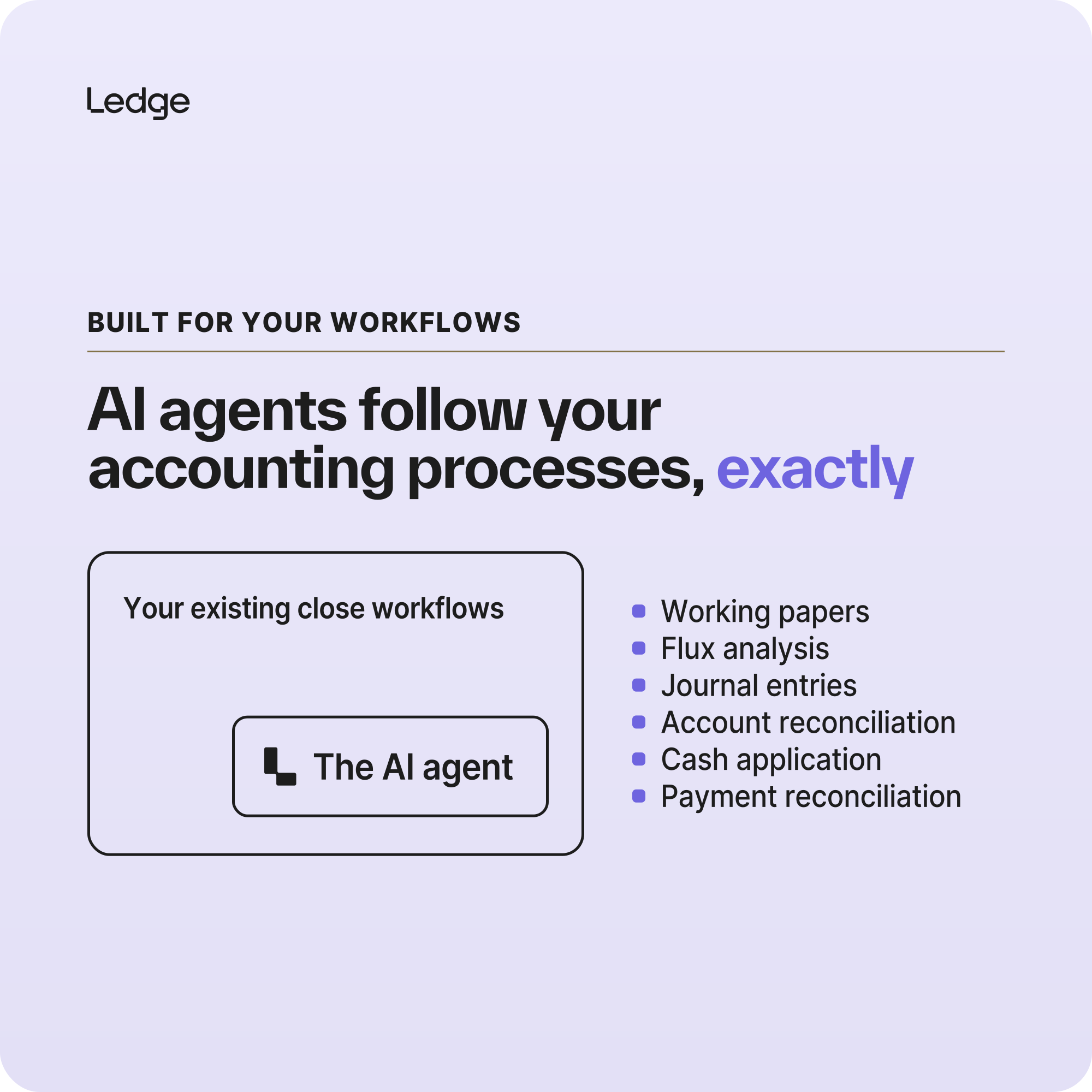
The result is a more precise approach to AI implementation. Rather than asking a general-purpose AI tool to understand an accounting process from scratch every time, finance teams can build agents that are designed around how their organization already closes the books.
As accounting processes evolve, those agents can evolve alongside them, creating automation that becomes increasingly aligned to the way the finance team works.